
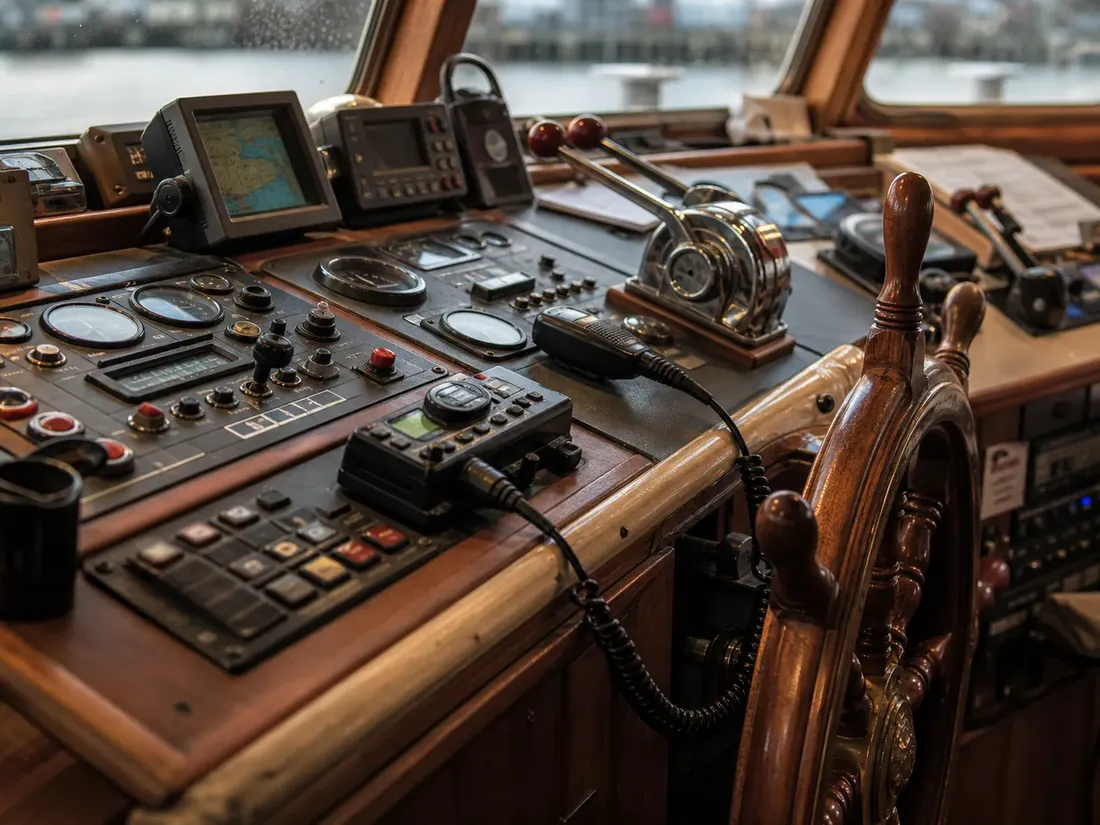
A review of a barge or tugboat injury looks at four things: the work you were actually doing, how the accident happened, what treatment you need now, and which companies had a hand in the vessel, the tow and the job. You do not need to know whether you are a "seaman," whether your employer's workers' compensation label is correct, or which maritime statute applies before you call. Those are the questions a review sorts out. You also do not need a complete file. A few photos, a copy of an incident report you may or may not agree with, and a list of unanswered questions is enough to start.
Tugboats and towboats are covered here together with barges. Whether the company calls the vessel a tug, a towboat, a pushboat or a fleet boat, the questions about your work, the accident and the companies involved are the same.
To request a review of your injury, call The Young Firm or use the review request on this page. The details that help most at the start are listed at the end of this page.
After a Barge or Tugboat Injury: Treatment, Reporting and Records
The steps below are practical, not legal maneuvers. They protect your health first and your claim second, in that order.
Get treated, and do not downplay symptoms
Get medical care as soon as you can, whether that means the boat's first aid, a company-arranged clinic or the emergency room. Tell the treating provider exactly how the injury happened and everything that hurts, not just the worst part. Back, neck, shoulder and knee injuries from line handling, lifting rigging or falls between barges may not be fully apparent on the day you are hurt. If a new symptom appears after you have already been seen, report it to a treating professional and ask that it be recorded. Symptoms that never make it into a medical record are much harder to prove later.
Report the injury accurately
Report the injury to the captain, mate or your supervisor as your company requires. Maritime employers generally have injury-reporting procedures, and there is no benefit to you in avoiding them. When you fill out or sign an incident report:
- Describe what happened in plain language. Do not guess at causes you did not see.
- If you are handed a form that already contains someone else's description, read it. If you disagree with something, say so on the form or in a separate written statement rather than signing something you know is wrong.
- Do not alter or backdate anything. If you later realize a report is incomplete or inaccurate, the right approach is a supplemental written statement, not a change to the original.
- Keep a copy of anything you sign.
Write down what you know now
Memories fade and crews scatter. As soon as you can, record for yourself:
- The date and approximate time of the injury.
- The name or number of the tug or towboat, and the barge numbers or identifiers if you know them.
- Where the vessel was: mile marker, fleet, dock, lock or terminal.
- The task you were doing and who told you to do it.
- Who was on watch and who saw what happened.
- The condition of the deck, the rigging, the lighting and the weather as you remember it.
- Every conversation with the company about the injury, including who said what and when.
Keep what you are given
Keep discharge instructions, prescriptions, work restrictions, appointment cards, pay stubs, crew change schedules, and every text, email or letter from the company or its insurer. If you took photographs safely and lawfully at the time, keep them and do not edit them. Do not go back aboard a vessel you no longer have permission to board, do not remove equipment or rigging, and do not put yourself at risk to gather evidence. That is what a lawyer's preservation demand and, if needed, a court order are for.
Understand what you are being asked to sign
A factual incident report and a settlement release are not the same thing, and neither is a recorded statement to an insurance adjuster. Reporting the facts is something you should do. A release, a settlement offer, a "final" maintenance check with conditions attached, or a request for a recorded statement is something you should have reviewed before you agree to it. What the document says and the circumstances in which you are asked to sign it both matter, which is why the exact paper needs individual review. If the company's doctor and your own doctor disagree about treatment or when you can return to work, that dispute has its own rules, which we explain on our page about your medical treatment rights under maintenance and cure.
Many workers hesitate to report or to ask questions because they are afraid of being labeled a problem and losing future work on the river. That fear is real, and we will not pretend a lawyer can make it disappear. What we can say is that an unreported injury does not protect your job, and it leaves you without the record you will need later. Reporting the facts accurately is a different thing from signing a statement you disagree with or a release you have not had reviewed.
Can I Bring a Claim If I Was Hurt Working on a Barge or Tugboat?
Possibly. An injured barge, tugboat or towboat worker may have rights under one or more of several maritime remedies, but which ones apply depends on your employment relationship, your connection to the vessel, how the injury happened and who was responsible. The name of the vessel and the label on your paycheck do not decide the question by themselves.
The main frameworks that come up in barge and towing injuries are these:
Jones Act negligence. The Jones Act, 46 U.S.C. § 30104, gives a seaman injured in the course of employment a right to sue the employer for negligence. It is a fault-based claim: the worker has to show the employer or its people did something unreasonable that played a part in the injury. It applies only to workers who qualify as seamen. Our Jones Act claims page explains the remedy in depth.
Maintenance and cure. Under general maritime law, an employer owes a seaman who becomes ill or injured in the service of the vessel a daily living allowance (maintenance) and payment of medical care (cure) until the seaman reaches maximum medical improvement. Fault does not have to be shown, although the obligation has its own eligibility requirements and the employer may raise its own defenses. It is a distinct obligation that the employer owes without any lawsuit being filed, but when it is not paid, paid at too low a rate or cut off early, a seaman may have to sue to enforce it. See maintenance and cure benefits.
Unseaworthiness. Also under general maritime law, the owner of a vessel owes seamen a vessel that is reasonably fit for its intended use, including its equipment, its crew and its methods of work. This is a separate claim from Jones Act negligence and can be brought against the vessel owner even when the owner is not the employer. See unseaworthiness claims.
LHWCA benefits. Workers who are not seamen but who are injured on navigable waters or certain adjoining areas while doing maritime work may fall under the Longshore and Harbor Workers' Compensation Act, 33 U.S.C. § 901 et seq. This is a no-fault benefits system administered through the U.S. Department of Labor, and it generally replaces a negligence suit against the employer. See longshore and harbor worker claims.
Third-party claims. Regardless of which system covers the employment relationship, a company other than the employer that caused or contributed to the injury may be liable under ordinary maritime negligence principles, and a longshore-covered worker may have a limited negligence claim against a vessel under 33 U.S.C. § 905(b). See third-party maritime injury claims.
Two cautions. First, these remedies do not stack automatically. A worker is either a seaman or not; seamen do not receive LHWCA benefits, and LHWCA-covered workers do not bring Jones Act or unseaworthiness claims. Second, benefits and fault-based damages answer different questions. Maintenance covers basic living expenses, cure covers medical care, and LHWCA benefits cover medical care and a portion of lost wages under the Act's own schedules and rules. A negligence or unseaworthiness claim may seek damages for losses such as lost earnings, loss of earning capacity, medical expenses not otherwise paid, and pain and suffering, subject to proof and to defenses.
Assigned Crew, Cargo Worker or Repair Worker: Why Your Actual Duties Matter
Your job title, whether you sleep aboard, and where the accident happened do not settle which law covers you. What matters is what you actually did, which vessels you were assigned to, how long and how regularly you worked aboard them, and who employed you. Counsel needs your real work history, not the company's label.
Courts decide seaman status by looking at the substance of the work. In general terms, the question is whether your duties contributed to the function of a vessel or the accomplishment of its mission, and whether your connection to a vessel in navigation, or to an identifiable group of vessels, was substantial in both its duration and its nature. Those are fact questions answered from your actual work history: how much of your time was spent aboard, which boats and barges you worked, who owned and controlled them, and whether you sailed with a vessel or went aboard for a discrete task and left.
The LHWCA runs alongside this. Its definition of "employee" in 33 U.S.C. § 902(3) excludes "a master or member of a crew of any vessel," and coverage under 33 U.S.C. § 903 depends on both the kind of work and the place of injury, subject to exclusions that need to be checked. Working aboard a barge does not by itself make someone a longshore worker any more than it makes someone a seaman.
The hypotheticals below are illustrations of what would be investigated, not predictions of how any case comes out.
| Hypothetical worker | Facts that point one way | Facts that need investigation |
|---|---|---|
| Deckhand on a fleet boat, 28 days on, 14 off, sleeping aboard, working across dozens of barges in the same company's fleet | Lives and works aboard a towing vessel; duties are navigation and cargo-related | Whether the boats worked form an identifiable fleet under common ownership or control; whether periods of shore assignment change the picture |
| Tankerman employed by a barge company, dispatched to different barges at different terminals, going home each night | Duties aboard vessels; connection to the employer's barges | Whether the barges are a fleet the worker regularly serves or a rotating set of assignments; how much time is spent aboard versus dockside; whether the worker's allegiance runs to vessels or to a shoreside dispatch operation |
| Shore-based cargo or terminal worker who boards barges to open hatches, check drafts or rig lines during loading | Works on the dock most of the time; boards vessels for discrete tasks | Whether the work is maritime employment at a covered situs under the LHWCA; whether any vessel-crew exclusion applies; who directed the vessel-side work |
| Repair or shipyard worker sent aboard a moored towboat to weld or service an engine | Performs a discrete task and leaves; employer is a repair contractor, not the operator | Whether the assignment is a one-time repair or part of a regular vessel-based relationship; whether the worker was exposed to the perils of the sea; whether the vessel owner's conduct is separately at issue |
Two points deserve emphasis for river workers specifically. First, inland work is not excluded from maritime law. Crews working the Mississippi River, the Intracoastal Waterway and the other navigable waterways of South Louisiana are not outside federal maritime law because they can see the bank, although whether a particular body of water, vessel and job bring an injury within maritime law is still a question answered from the facts. Second, a worker who moves between many barges is not disqualified because no single barge is "his" vessel. The question becomes whether those barges and boats form an identifiable fleet, and that requires looking at who owns and controls them.
We keep the full analysis, including the tests courts apply and the controlling cases, on our page about whether you qualify as a Jones Act seaman. If your work looks more like the cargo or repair examples, our pages on longshore and harbor worker claims, workers covered by the LHWCA and port, dock and shipyard injuries will be more relevant.
Find Guidance for Deckhand Work, Mooring, Collisions and Fleeting Injuries
Knowing what task was underway when you were hurt helps focus the investigation. It does not, by itself, establish that anyone breached a legal duty. That requires looking at how the task was set up, supervised and equipped.
Many barge and towing injuries involve a few recurring kinds of work. Brief descriptions follow, with links to the pages that go into detail. A few terms are defined for family members and newer workers.
Deckhand injuries. Deckhands do most of the physical work on a tow: building and breaking tow, handling lines and wires, ratcheting rigging, checking barges, cleaning decks. Injuries range from strains and crush injuries to falls overboard. Our page on barge and tugboat deckhand injuries covers how those tasks go wrong and what to look at.
Line-handling and mooring injuries. "Making tow" means assembling barges into a rigid unit with wires, ratchets and lines so the boat can push them as one. "Mooring" means securing the tow or a barge to a dock, a fleet or another barge. Lines under tension can part and "snap back," and hands and feet caught in a bight or between a line and a fitting can be lost. See line-handling and mooring injuries.
Collisions and allisions. A collision is contact between two moving vessels. An allision is a vessel striking a fixed object such as a bridge pier, a dock or a moored barge. Either can throw crew off their feet, knock them overboard or trap them in a damaged space. See barge and tugboat collision claims.
Fleeting injuries. A fleet is an area, usually along the riverbank, where barges are moored in tiers waiting to be picked up, loaded or unloaded. Fleet boats move barges in and out, and fleet crews work on barges that are constantly being shifted around them. See injuries during barge fleeting.
Transfers, deck work, loading and other scenarios. Stepping between barges or from boat to barge, working on wet or cluttered decks, climbing barge ladders, operating cranes or loading equipment, and handling cargo covers and hatches all produce their own injury patterns. Our page on other barge and tugboat injury scenarios collects them.
If you are reading this because a family member was killed on a barge or tug, none of this may feel relevant yet. Our page on fatal barge and tugboat accidents is written for families and explains, without pressure, what a family can ask about and how to reach us.
Your Employer, Tug Operator and Barge Owner May Be Different Companies
The vessel you were standing on when you were hurt does not tell you who your employer was or who else may be responsible. In towing work it is common for the boat, the barges, the cargo and the crew to belong to different companies. Each company's role, control and legal duties have to be examined separately.
A single injury on the Lower Mississippi can involve any of the following:
- The employer. For a seaman, the Jones Act defendant and the party that owes maintenance and cure is the legal employer. That is usually the company on your paycheck, but not always: when a crewing company supplies deckhands to a boat operator, or one company pays wages while another directs the work, who counts as the employer can be disputed and has to be established from the facts.
- The tug or towboat operator. The company that operates the boat, often the same as the employer but not always. The operator controls navigation, watch schedules and deck procedures.
- The barge owner or charterer. Barges are frequently owned by one company, leased to another and loaded with a third company's cargo. Who owned, chartered and actually controlled the barge, and who was responsible for the condition of its deck, fittings, covers and ladders, are facts to establish, because they bear on which company owed what duty.
- The fleeting operator. In a fleet, the fleeting company controls the arrangement of barges, the mooring, the lighting and the movement of fleet boats.
- Terminals, contractors and equipment suppliers. Dock operators, loading contractors, crane companies and manufacturers of rigging or equipment may each have a role.
None of these companies is liable simply because it owned something or was present. Negligence liability depends on whether a company had a duty to you, whether it breached that duty, and whether the breach caused your injury. Two obligations work differently: a seaman's employer owes maintenance and cure without proof of fault, and a vessel owner's duty to provide a seaworthy vessel does not depend on showing negligence. But you cannot evaluate any of that until you know who did what. Those relationships are established through hiring paperwork, crew lists and assignment records, charter and towing agreements, barge ownership records, fleet logs, and the work instructions you received.
One limit worth flagging now: if your employment is covered by the LHWCA rather than the Jones Act, your ability to sue a vessel for negligence is governed by 33 U.S.C. § 905(b), which allows such a claim but restricts it in ways that matter, including where the vessel owner and the employer are the same company. We explain those limits on our Section 905(b) vessel claims page. For how claims against non-employers fit with a Jones Act or LHWCA claim, see third-party claims alongside Jones Act and LHWCA rights and our broader page on third-party maritime injury claims.
How a Barge or Tugboat Injury Investigation Connects Tasks to Evidence
A useful investigation traces the task you were doing, the conditions you were working in and the instructions you were given to records that can confirm or challenge the company's account. You do not need to gather those records yourself before asking for help. Most of them are in the company's hands, and the lawyer's job is to get them preserved and produced.
The matrix below shows how that connection works. For each task, the third column is a question the evidence might answer, not an assumption that something was wrong.
| Task at time of injury | Records that may be relevant | Question the evidence can help answer |
|---|---|---|
| Making or breaking tow | Crew assignments, watch schedules, tow configuration, rigging inventory and inspection records, the mate's or captain's instructions | Was the job staffed and supervised the way the company's own procedures call for, and was the rigging in usable condition? |
| Transferring between boat and barge or barge to barge | Vessel positions, deck lighting, weather and river stage, whether a gangway or safe access was available, photos of the barge freeboard and fittings | Was there a reasonably safe way to make the transfer, and was it used? |
| Deck work: cleaning, checking barges, handling covers or hatches | Maintenance records, non-skid and coating condition, cover and hatch inspection records, prior incident or near-miss reports | Was the working surface and equipment maintained, and had the same hazard been reported before? |
| Fleet work | Fleet movement logs, barge placement records, fleet boat assignments, radio communications, fleet lighting and mooring inspections | Did a barge or boat move when the crew on deck did not expect it, and who controlled that movement? |
| Collision or allision | Voyage data, electronic charting and AIS records, radio logs, Coast Guard casualty reports, drug and alcohol test results, watch and rest-hour records | What did the wheelhouse know and do in the minutes before contact, and was the watch adequately rested and staffed? |
There is a real difference between what you can safely hold onto and what has to be requested. On your side: your own photos, texts and messages, your notes, the names and contact information of crewmates who saw what happened, and copies of what you were given. On the company's side: vessel logs, maintenance and inspection records, crew rosters, electronic navigation and communication data, safety management system documents, and internal incident investigations. Availability and retention vary from company to company. Electronic data in particular can be overwritten as a matter of routine, which is one reason prompt preservation requests matter.
Many towing vessels are subject to 46 CFR Subchapter M, the Coast Guard's inspection and safety regulations for towing vessels, which address matters such as safety management systems, crew training, equipment and recordkeeping. Whether Subchapter M applied to a given boat, and which version was in force on the accident date, depends on the vessel's size, type and service and on the phase-in schedule, so that has to be confirmed before relying on it. A regulation, even where it applies, is evidence of a standard; it does not convert an accident into a violation or a violation into liability without proof of the connection.
Detailed reconstruction of specific accident types lives on our pages about line-handling and mooring injuries, collisions, fleeting operations and other barge and tugboat injury scenarios.
Medical Bills, Living Expenses and Lost Work Are Different Parts of the Review
A seaman who is injured or falls ill in the service of the vessel is generally owed maintenance and cure by the employer, without regard to fault, until maximum medical improvement. A worker covered by the LHWCA may be entitled to medical and disability benefits under that Act. A separate negligence or unseaworthiness claim may address wage loss, reduced earning capacity and other losses, but only where the law and the evidence support it. Not every worker has every category.
The distinction matters because the urgency is different. Maintenance and cure and LHWCA benefits are meant to address needs that begin as soon as you are hurt, but none of them is automatic in practice: each has its own eligibility rules, maintenance is a modest daily allowance for basic living expenses rather than a replacement for your wages, and LHWCA disability compensation has waiting-period and payment rules of its own. A damages claim comes later and depends on proof.
Immediate questions about benefits:
- Is the company paying maintenance? At what daily rate, and what did they base it on?
- Is the company paying for treatment, or has it approved only its own doctor?
- Has treatment been denied, delayed or conditioned on a statement or a return to work?
- Have payments stopped, and what reason was given?
- For workers who may be under the LHWCA, has the employer or insurer filed with the Department of Labor, and are compensation payments being made?
If payments have been denied or cut off, that is its own problem with its own remedies, addressed on our page on denied or terminated maintenance and cure. Maintenance rates, the duration of benefits and medical-choice disputes are covered on the maintenance and cure pages. LHWCA compensation, schedule awards and medical benefits are covered on LHWCA benefits and compensation.
Questions about the injury claim itself:
- What are your current work restrictions, and what do the doctors say about your ability to return to deck or wheelhouse work?
- What did you earn before the injury, including overtime and day rates, and what is your earnings history over the past several years?
- What are the projected costs of future treatment?
- What has the injury done to your ability to work in the industry at all?
Damages in a Jones Act or unseaworthiness case can include past and future lost earnings, loss of earning capacity, medical expenses not otherwise paid, and pain and suffering, subject to proof and to defenses. We do not publish settlement averages or formulas because they would be misleading; the value of a claim depends on liability, the severity and permanence of the injury, the worker's age and earnings, and the strength of the evidence. Our page on Jones Act compensation and damages explains the categories and what affects them.
Company Blame or a Signed Report Does Not Replace a Legal Review
The company says the accident was my fault. Is there any point in calling a lawyer?
Yes. A company's fault assessment is an opinion, often formed within hours and by people with an interest in the outcome. It is not a legal ruling. In a Jones Act case, a worker's own negligence can reduce damages in proportion to fault, but it does not bar the claim. Maintenance and cure does not depend on who was at fault, although the employer may raise its own defenses, such as willful misconduct, and eligibility still has to be established. LHWCA benefits are no-fault. So even taking the company's version at face value, "your fault" does not mean "no rights." The company's version is a starting point for investigation, not the end of it.
It was routine deck work. Doesn't that mean it was just an accident?
Routine does not mean safe, and it does not answer whether the employer met its legal duties. Building tow and handling lines are routine, and they are also where crews get hurt when the work is understaffed, rushed, done with worn rigging or performed in conditions where it should have been paused. The question is not whether the task was normal. It is whether the way it was set up, staffed and supervised was reasonable.
I signed an incident report. Did I give up anything?
Signing an accurate factual report does not waive legal rights. Signing an inaccurate one can create a problem, and how serious a problem depends on what the report says, how it came to be signed and what other evidence exists. Keep your copy, and be prepared to explain honestly what you were told, whether you read it, whether you were in pain or medicated, and what in it you disagree with. Do not go back and change anything. A supplemental statement is the right way to correct the record.
I signed something else, or accepted a check. Is it over?
Not necessarily, but do not assume it is fine either. A settlement release is different from an accident report, and maritime law has long treated releases signed by seamen with more scrutiny than ordinary contracts, placing the burden on the employer to show the seaman signed freely and with a full understanding of his rights. That is a standard, not a guarantee. Whether any particular release holds up depends on the document, the circumstances and what was disclosed. Bring the paper and an honest account of how it came to be signed; neither question can be answered without both.
Will the company retaliate if I make a claim?
We cannot promise it will not, and no honest lawyer can promise you job protection. What we can tell you is that the decision to report and to seek review does not change the fact of the injury, and that the record you build now is what you will rely on later, whatever the company does. For how negligence is evaluated in these cases, see our page on Jones Act negligence.
Do Not Treat Every Barge Injury as Having the Same Deadline
The deadline that matters most to you depends on the claim and on any paperwork you have received. The time to file a lawsuit for a maritime injury, the time to give notice and file for LHWCA benefits, and the time to respond to a vessel owner's court filing are governed by different rules and can run out at different times.
Three separate clocks can be running at once:
| Type of deadline | Governed by | What triggers it |
|---|---|---|
| Time to file a maritime personal injury lawsuit (Jones Act, unseaworthiness, general maritime negligence) | 46 U.S.C. § 30106 and related case law on when a claim accrues | Generally the date the injury occurred or was discovered, with exceptions that depend on the facts |
| LHWCA notice and claim filing | 33 U.S.C. §§ 912 and 913 | Notice to the employer and a claim filed with the Department of Labor, each within its own period after injury or awareness of the injury's relationship to employment |
| Response to a vessel owner's limitation-of-liability proceeding | Federal Limitation of Liability Act and the federal admiralty rules | A vessel owner files in federal court to cap its exposure; the court sets a date by which claimants must file, and that date can fall well before any other deadline |
The third item is the one that catches workers off guard. After a serious casualty, especially a collision, fire or death, a vessel owner may file a limitation action in federal court. Claimants receive a formal notice with a date for filing claims. Missing that date can affect your ability to recover, regardless of how much time you might otherwise have had. If you receive anything that looks like a court filing, treat it as urgent.
Do not assume that being in treatment, or being in ongoing discussions with the company or its adjuster, extends any of these clocks. Whether any exception applies to your situation is a question for counsel, not something to build on. When you contact us, we will ask for the accident date and for copies of any letters from the insurer or papers from a court, because those are what let us tell you which deadline is next.
Specific time periods, accrual rules and filing procedures are on our pages about Jones Act filing deadlines and LHWCA filing deadlines.
New Orleans Counsel for Louisiana River and Gulf Coast Vessel Workers
The Young Firm is based in New Orleans and practices Jones Act and maritime injury law. This page is written for the towing and barge industry along the Lower Mississippi River from the Gulf up through Baton Rouge, the Gulf Intracoastal Waterway, the Morgan City and Atchafalaya corridor, Port Fourchon and the Houma-Terrebonne area, and the Gulf Coast beyond Louisiana.
Three questions people searching for a barge injury lawyer near them tend to run together, and they should be kept apart:
- Where you live. Many river crews live hours from New Orleans, or in Texas, Mississippi, Arkansas or Kentucky, and work boats that pass through Louisiana. Where you live does not control which law applies to your claim.
- Where the vessel worked. Federal maritime law is generally defined by the vessel and the work rather than by state lines, and whether it applies to a given injury turns on those facts. A towboat that crosses from Louisiana into Mississippi in the course of a voyage does not change legal systems at the border, and inland work is not "less maritime" than offshore work.
- Where a claim can be brought. Venue depends on the defendants, the employer's location, where the injury occurred and other factors. Which court is right for your case is something to discuss during intake, not something to assume from a map.
If you cannot travel to New Orleans because of your injury or where you live, tell us that at the outset.
For information about the firm as a whole, including its attorneys and its broader maritime practice, see The Young Firm.
Legal Sources Behind This Barge Injury Guide
This page is general legal information for injured vessel workers and their families. It is not legal advice, and reading it does not create an attorney-client relationship. Every statement of law on this page is general; whether it applies to you depends on facts we have not seen. The principal authorities referred to on this page are listed below so that you, or a lawyer you consult, can check them.
Statutes.
- 46 U.S.C. § 30104 (the Jones Act): a seaman injured in the course of employment may bring a civil action against the employer.
- 46 U.S.C. § 30106: the general time limit for a civil action for maritime personal injury or death.
- 33 U.S.C. §§ 902 and 903: LHWCA definitions, including the exclusion of masters and crew members, and coverage requirements.
- 33 U.S.C. § 905: exclusiveness of LHWCA liability and the § 905(b) vessel-negligence remedy and its limits.
- 33 U.S.C. §§ 912 and 913: LHWCA notice and claim-filing requirements.
Court decisions. Supreme Court decisions bind every court; Fifth Circuit decisions bind federal courts in Louisiana, Texas and Mississippi.
- Chandris, Inc. v. Latsis, 515 U.S. 347 (1995): the general test for seaman status described above. The Fifth Circuit's en banc decision in Sanchez v. Smart Fabricators of Texas, L.L.C., 997 F.3d 564 (5th Cir. 2021), refined how that test is applied in this circuit; it and the other Fifth Circuit decisions applying Chandris are discussed on our Jones Act seaman status page.
- Vaughan v. Atkinson, 369 U.S. 527 (1962): the employer's obligation to pay maintenance and cure, with doubts resolved in favor of the seaman.
- Mitchell v. Trawler Racer, Inc., 362 U.S. 539 (1960): the vessel owner's duty to furnish a seaworthy vessel does not depend on proof of negligence.
- Garrett v. Moore-McCormack Co., 317 U.S. 239 (1942): the employer bears the burden of showing that a seaman's release was signed freely and with a full understanding of his rights.
The duties of maintenance and cure and seaworthiness, and the standards applied to seamen's releases, are judge-made general maritime law developed across many decisions rather than a single statute. Which decisions control a given question depends on the facts.
Regulations and agency guidance. 46 CFR Subchapter M sets Coast Guard towing vessel inspection and safety requirements; applicability depends on the vessel and the accident date, and a regulatory violation is not the same as legal liability. The U.S. Department of Labor, Office of Workers' Compensation Programs, publishes explanatory material on LHWCA coverage, benefits and filing; guidance explains the law and should be checked for currency.
Law changes. Before you rely on any statement here about your own situation, have a lawyer confirm it against current authority and your facts.
Request a Review of Your Barge, Tugboat or Towboat Injury
You can start a conversation with us before you have a file, a diagnosis or a theory of your case. Call The Young Firm or submit the review request on this page. What helps most at the beginning is simple:
- The date of the accident, or your best recollection.
- Your job and what you were doing when you were hurt.
- The name or number of the boat and, if you know them, the barges involved.
- Who employed you and who else was working the job.
- Where it happened.
- What treatment you have had, what has been paid, and what has been denied or delayed.
- Copies of anything you have signed or received from the company, its insurer or a court, if you have them.
When you contact us, we will ask about your work history, the accident and the companies involved. Ask at the outset about the cost of the initial review and how fees and litigation costs are handled. If we believe we can help and you want to proceed, the terms of representation will be explained to you in writing before you decide whether to go forward. If we conclude we are not the right firm for your situation, we will tell you that directly.
Two things you should understand before you reach out. First, contacting us, submitting information or speaking with someone at the firm does not by itself make us your lawyers. Second, an inquiry does not stop any deadline. If you have received court papers or insurer correspondence with dates in it, say so at the start so the timing can be addressed first.
If you are the spouse, parent or child of a worker who died on a barge, a tug or a towboat, you do not need to know what kind of claim the family may have before you call. Tell us what you know about the accident and the companies involved, and we will explain what a family can ask about and what happens next. Our page on fatal barge and tugboat accidents is written for families and covers those questions in more detail, without pressure.