
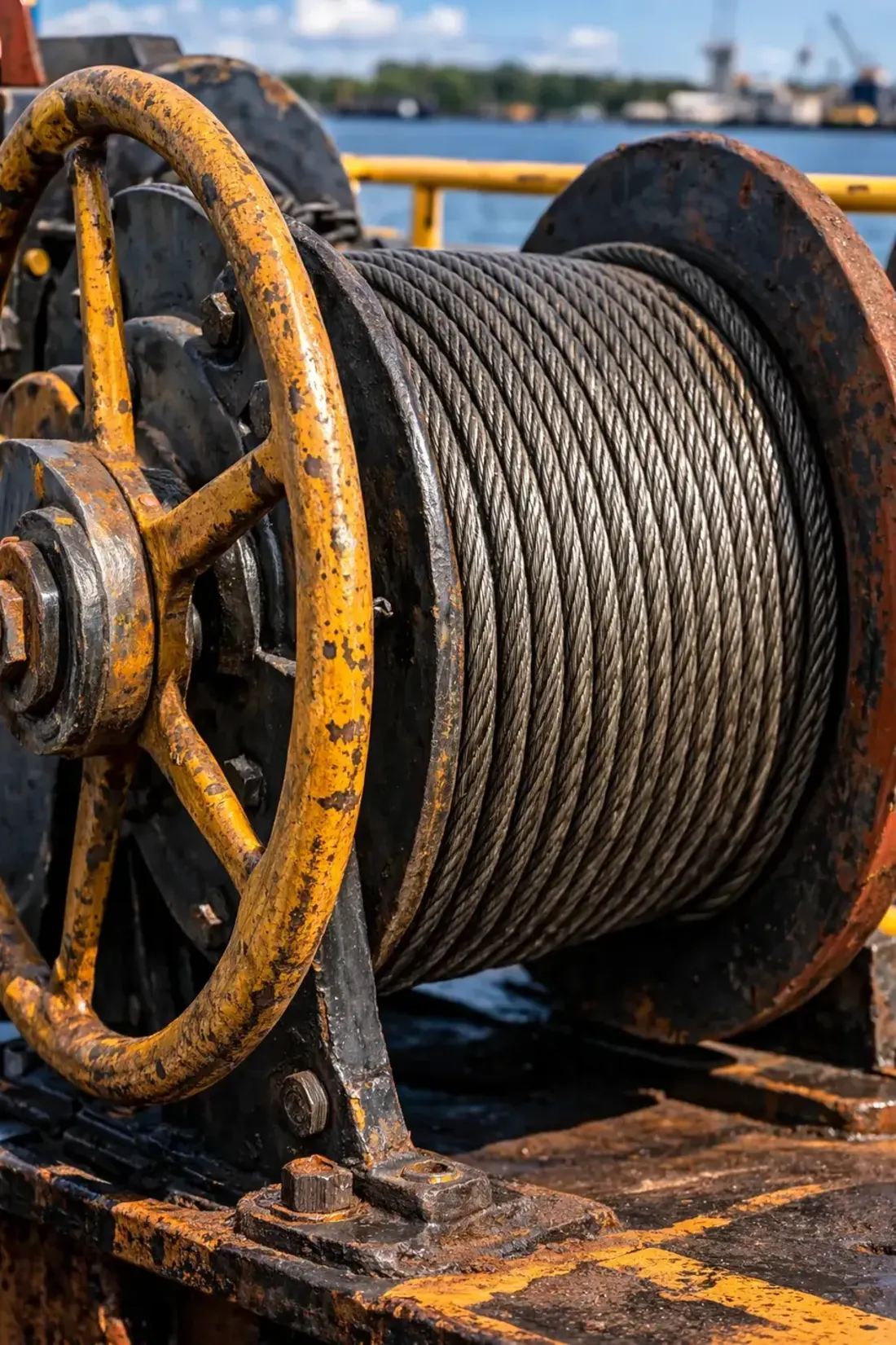
Here is the honest starting point: your job title is not what decides coverage. Two people with the same title at the same facility can end up under different laws depending on what they actually did each day and precisely where they were hurt. Terminal workers, dock workers, cargo workers, and harbor construction workers are examples of roles that require fact-specific review, because those labels describe a workplace more than a set of duties, and the title alone does not establish duties, situs, or which exclusions apply. Coverage for these workers is a fact question, not an automatic yes or no.
If you are reading this while waiting on treatment approval or wondering how the next paycheck gets replaced, you do not have to identify the correct statute before asking for help. The Young Firm handles Jones Act and maritime injury matters from New Orleans, serving Louisiana and the Gulf Coast. Working in this region does not make anyone covered by federal law; the facts do. But those facts—your usual duties, your assignment history, and the exact spot where the injury occurred—are exactly what a duties-and-location review sorts out. If you are unsure which law applies, or you have been told the LHWCA does not, contact The Young Firm and describe your role, your usual duties, your injury date, and where you were hurt. For broader information about the Act and how claims are handled, see LHWCA claims and legal help.
LHWCA Coverage Usually Turns on Your Duties and Where You Were Injured
For most injuries on land at a port or shipyard, LHWCA coverage requires two things: status, meaning you were engaged in maritime employment, and situs, meaning the injury happened on navigable waters or on a qualifying adjoining area such as a pier, wharf, dry dock, terminal, building way, or marine railway customarily used for loading, unloading, repairing, dismantling, or building vessels (33 U.S.C. §§ 902(3), 903(a)). Statutory exclusions are checked separately. Injuries that occur on the actual navigable waters follow a different analysis, so the two-part land-based test is not a universal rule.
Status: what you did, not what you were called
Maritime employment status looks at your work and its connection to covered maritime operations. The Supreme Court has explained that the 1972 amendments extended coverage landward to reach workers engaged in the intermediate steps of moving cargo between ship and land transportation, not just those on the ship or at the water's edge (Northeast Marine Terminal Co. v. Caputo, 432 U.S. 249 (1977)). The Court later held that workers who maintain and repair equipment essential to loading and unloading can also hold maritime status, even though they never touch cargo themselves (Chesapeake & Ohio Railway Co. v. Schwalb, 493 U.S. 40 (1989)).
That does not mean everyone at a terminal qualifies. Status asks whether your duties were part of, or integral to, the covered maritime work happening there.
Situs: the exact spot, not the general neighborhood
Situs is about the place of injury. Being near water, or working for a company that operates a wharf somewhere, does not establish situs. The statute lists specific adjoining structures and adds "other adjoining area customarily used by an employer" for vessel loading, unloading, repair, dismantling, or building (33 U.S.C. § 903(a)). Both parts matter: the area must adjoin navigable waters, and it must be customarily used for maritime activity.
This is where Louisiana matters need particular care. The Fifth Circuit, sitting en banc in New Orleans Depot Services, Inc. v. Director, OWCP (Zepeda), 718 F.3d 384 (5th Cir. 2013), read "adjoining" to mean an area that borders on or is contiguous with navigable waters, rejecting a broader reading that had swept in facilities set back from the water in a general maritime district. A container repair yard several hundred yards from the Industrial Canal did not qualify. In practical terms, that means the boundary lines of a facility, what separates it from the waterway, and how the specific area is used all have to be established in a Louisiana, Mississippi, or Texas case. Other circuits have read the adjoining-area language differently, so the Fifth Circuit's approach should not be assumed to control everywhere along the Gulf Coast or beyond.
Actual navigable waters: a separate track
The two-part test above describes land-based coverage. If you were injured on the water itself—on a barge, a work platform floating in a channel, a vessel under repair afloat—the Supreme Court has held that a worker injured on actual navigable waters in the course of employment, working for an employer covered by the Act, is covered without a separate showing that the work was "maritime" in the land-based sense, subject to the statutory exclusions (Director, OWCP v. Perini North River Associates, 459 U.S. 297 (1983)). The Fifth Circuit has qualified this: a worker whose presence on the water is merely transient or fortuitous does not gain coverage from an accident that happens to occur over water (Bienvenu v. Texaco, Inc., 164 F.3d 901 (5th Cir. 1999) (en banc)). For a water injury, the review examines the nature and extent of your employment-related work on the water. A worker newly assigned to water work is not automatically excluded, and recurring exposure is not automatically sufficient; the facts of the assignment have to be examined against current controlling authority.
Offshore work raises additional coverage routes, including statutory extensions of the LHWCA, which are handled on offshore injury claims and offshore platform injuries.
Stevedores, Cargo Workers, and Dock or Terminal Employees: Which Duties Matter?
Stevedoring—loading and unloading vessels—is the core of what the Act protects. If your job was moving cargo between a ship and the dock, or between the dock and the trucks and railcars that carry it inland, your duties sit squarely within the kind of work Caputo described. The question then shifts to location and exclusions.
Dock and terminal titles are broader and less informative. A "terminal employee" might lash containers on a vessel, drive a yard hustler, maintain the gantry cranes, sweep the warehouse, or process paperwork in an office trailer. Each of those describes a different relationship to loading and unloading, and each raises different questions.
Direct cargo handling versus supporting work
Direct handling of cargo in the ship-to-land movement is the clearest case. Warehouse, maintenance, and transportation duties require closer review:
- Equipment maintenance. Under Schwalb, maintaining and repairing equipment essential to loading and unloading can qualify. The workers there kept conveyor systems running at a coal terminal; the Court reasoned that if the equipment fails, loading stops. That reasoning does not extend to every mechanic at every terminal. What the equipment does, and whether it is part of the loading and unloading process, has to be shown.
- Warehouse work. Cargo moving through a warehouse as part of the flow between vessel and inland transport is different from goods that have completed their maritime journey and are sitting in ordinary storage. Where your cargo sat in that chain matters.
- Transportation. The statute excludes certain suppliers, transporters, and vendors who are only temporarily doing business on a covered employer's premises and who are not performing work normally done by that employer's covered employees, if they are covered by state workers' compensation (33 U.S.C. § 902(3)(D)). A truck driver who picks up a container at the gate is in a different position from a driver employed by the terminal to shuttle cargo between the ship and the yard.
Mixed duties
Many terminal workers move between covered and noncovered tasks during a shift or across a week. Coverage does not turn on the specific task at the instant of injury; Schwalb rejected that approach. At the same time, some regular portion of your work must connect to covered maritime operations, and the statute sets no percentage. What a lawyer looks for is your actual pattern of work over time, documented as well as it can be.
Hypothetical contrast (for illustration only; every fact assumed here must be reviewed by a lawyer):
Worker A is employed by a terminal operator on the Mississippi River. She is assigned across the week to lashing gangs, hustler driving, and occasional yard cleanup. She is hurt in the container yard adjacent to the berth. Her duties connect to the ship-to-land cargo movement, and her injury location is an area used for that purpose. Her status and situs facts point toward a claim worth pursuing.
Worker B is a delivery driver for an office supply vendor. He drops off a pallet at the terminal's administrative building twice a month and is injured in the parking lot. His presence is incidental; his duties are not part of loading or unloading; the transporter exclusion may apply if he is covered by state compensation. His remedies, if any, would need to be evaluated under other law.
Occupation-to-evidence: cargo and terminal roles
| Role | Duties that may support status | Location facts to establish | Statutory exclusions to check | Useful records |
|---|---|---|---|---|
| Stevedore / longshoreman | Loading, unloading, lashing, rigging cargo | Vessel, wharf, or berth-adjacent area; contiguity with the waterway | Crew member (if assigned to the vessel) | Gang sheets, dispatch records, timecards |
| Checker / clerk on the dock | Tallying and directing cargo as it moves ship to shore | Dock or terminal yard where cargo moves | Exclusive office/clerical exclusion, conditioned on state coverage | Job description, work location logs |
| Terminal equipment operator | Crane, forklift, hustler operation in cargo flow | Where on the terminal footprint the injury occurred and how that area is used | Transporter exclusion for outside drivers | Equipment logs, assignment records, site map |
| Terminal maintenance mechanic | Repair of cranes, conveyors, or other equipment shown to be essential to loading and unloading | Terminal area; equipment location | None automatic | Work orders, maintenance tickets |
| Warehouse worker | Handling cargo in the ship-to-inland movement, as opposed to goods in ordinary storage | Whether the warehouse adjoins navigable water and is customarily used for maritime cargo; a facility set back from the water raises the Zepeda issue in the Fifth Circuit | None automatic | Cargo manifests, facility plans |
None of these rows means "covered" or "not covered." They show what a review has to establish for each role. A lawyer handling a stevedore or terminal worker's injury claim uses these records to test the employer's classification against what was actually done and where. For the accident side of terminal and dock work—cranes, forklifts, container handling, falls—see dock, wharf, and pier injury claims, marine terminal injuries, loading and unloading injuries, and common longshore accident scenarios.
Shipbuilders and Ship Repair Workers: The Trade Matters, but So Does the Assignment
Shipbuilders, ship repairers, and ship-breakers are named in the statute as harbor workers engaged in maritime employment (33 U.S.C. § 902(3)). For Louisiana and Gulf Coast yards, that covers a wide range of skilled trades: welders, fitters, pipefitters, electricians, marine mechanics, painters and blasters, riggers, and the laborers who support them.
The trade name gets you to the door. What you were assigned to do gets you through it.
Vessel work versus facility work
A welder employed at a shipyard who spends the week welding hull plate is performing shipbuilding or repair. A welder employed by the same yard who spends the month fabricating a storage building's steel frame is in a different position for that assignment, unless the facility work can be shown to be integral to the yard's shipbuilding or repair operations. The same distinction arises for electricians running vessel wiring versus those maintaining the yard's lighting, and mechanics servicing a vessel's engines versus those servicing the yard's trucks. In each case, the connection between the work and covered operations has to be examined, not assumed from the trade.
Assignment records are central evidence. Work orders, job tickets, or supervisor's logs placing you on a hull number or a vessel repair project support the status question; records showing a mix point to the pattern over time rather than the single task at the moment of injury. Those documents are weighed together with your account, witness accounts, and your employment history—they inform the analysis rather than end it.
You do not have to board a vessel
Land-based shipbuilding and repair work qualifies without ever setting foot on a ship. Building ways, dry docks, marine railways, and adjoining fabrication areas customarily used for vessel construction or repair are covered situs under § 903(a). Modular construction—fabricating vessel sections in a shop for later assembly—is still shipbuilding work if the shop is a qualifying adjoining area, though the Zepeda contiguity question can arise if a fabrication shop is separated from the water by other property.
Recreational vessels and small commercial vessels
Two statutory carve-outs require precise review in shipyard cases:
- Recreational vessels. The Act excludes individuals employed to build recreational vessels under sixty-five feet, and individuals employed to repair (or dismantle in connection with repair) recreational vessels, if they are covered by state workers' compensation (33 U.S.C. § 902(3)(F)). This language was amended in 2009, so the injury date affects which version applies, and the Department of Labor's regulations define what counts as a recreational vessel. A yard that builds both pleasure craft and commercial workboats may have some workers inside the exclusion and others outside it, depending on the assignments involved.
- Small commercial vessels. Under § 903(d), compensation is not payable to an employee at a facility the Secretary of Labor has certified as engaged exclusively in building, repairing, or dismantling small vessels. "Small vessel" has two different thresholds: a commercial barge under sixty-five feet in length, or a commercial tugboat, towboat, crew boat, supply boat, fishing vessel, or other work vessel under eighteen tons net. The exclusion has limits. It does not apply if the injury occurs on the navigable waters or on an adjoining pier, wharf, dock, facility over land for launching vessels, or facility over land for hauling, lifting, or drydocking vessels; it does not apply if the employee is not subject to coverage under a state workers' compensation law; and it does not apply at a facility that receives federal maritime subsidies. Gulf Coast yards building small workboats can raise this issue, and whether the facility actually holds a certification is a threshold fact.
Neither carve-out means all boat work is excluded. Both mean the vessel type, its length or tonnage, its intended use, the facility's overall business and certification status, the exact injury location, and your state coverage status have to be pinned down.
Occupation-to-evidence: shipbuilding, repair, and breaking
| Role | Duties that may support status | Location facts to establish | Statutory exclusions to check | Useful records |
|---|---|---|---|---|
| Hull welder / fitter (new construction) | Fabricating or joining vessel structure | Building way, fabrication shop adjoining water, dry dock | Recreational vessel under 65 feet; § 903(d) certified small-vessel facility | Hull number assignments, weld maps, job tickets |
| Ship repair mechanic / pipefitter | Repairing vessel systems in yard or afloat | Dry dock, repair berth, or vessel on the water | Recreational vessel repair; crew member if the worker sails with the vessel | Repair specifications, work orders |
| Marine electrician | Vessel wiring and systems installation, as distinguished from yard-only electrical work | Vessel or adjoining shop | Recreational vessel; § 903(d) | Assignment logs distinguishing vessel from yard work |
| Blaster / painter | Coating vessel hulls and structures | Dry dock, blast shed adjoining the water; contiguity of the blast area | Recreational vessel; § 903(d) | Project assignments, shift records |
| Ship-breaker / dismantling laborer | Cutting and removing vessel structure | Dismantling site adjoining navigable water | Recreational vessel dismantling tied to repair | Project records, site descriptions |
| Yard laborer / helper | Supporting vessel construction or repair crews; which crews and projects | Where the support work occurred | None automatic | Crew assignment sheets, timecards |
For a shipbuilder or ship repair worker, a lawyer's review typically starts with these assignment records and the facility's layout before reaching any question of fault. Shipyard hazards—falls from staging, confined-space exposures, crane and rigging failures, welding and explosion injuries—are addressed on shipyard injury claims.
Harbor Construction Workers: Project Purpose and Work Location Need Separate Review
Building or repairing piers, wharves, bulkheads, docks, and other marine structures puts workers next to water every day. That proximity raises LHWCA questions; it does not answer them. Harbor construction is one of the areas where a job description tells you the least about coverage, because two things have to be examined independently: what the project is for, and whether the injury occurred on land or on the actual navigable waters.
Land-based marine construction
For an injury on land—say, on the deck of a pier under construction or on the shore end of a bulkhead job—the two-part test applies. Status asks whether the construction is maritime employment. Building a wharf that will be customarily used for loading and unloading vessels connects the work to covered maritime operations in a way that building a waterfront restaurant does not, even if both sit at the water's edge. Situs asks whether the injury location adjoins navigable water and is customarily used for the listed vessel activities; a structure under construction may or may not yet meet that description depending on its function and the surrounding facility.
Construction on the water
For an injury on the water itself, Perini controls the framework. In that case, a construction worker building a sewage treatment plant—a project with no maritime purpose—was injured while working on a barge in the Hudson River. The Supreme Court held he was covered because his injury occurred on actual navigable waters in the course of his employment, and the 1972 amendments had not withdrawn that pre-existing coverage. Project purpose did not defeat the claim.
In the Fifth Circuit, that rule comes with the Bienvenu qualification already noted: your presence on the water cannot be merely transient or fortuitous. How much of your work took place on construction barges, floating platforms, or workboats, and why you were there, are facts that have to be developed rather than assumed from the job title or from a single incident.
Hypothetical contrast (for illustration only; all assumed facts require lawyer review):
Worker C is a pile driver on a project replacing a cargo wharf at a river terminal. He works partly from a spud barge positioned in the river and partly from the shore. He is hurt on the barge. His injury is on actual navigable waters, and his time aboard the barge is part of his assigned work rather than an isolated visit. The Perini framework applies, subject to the transient-or-fortuitous qualification, and the crew-member exclusion has to be ruled out because he works aboard a barge.
Worker D is a concrete finisher employed by a general contractor on the same project, assigned to a parking lot and drainage work behind the terminal. He is hurt on land. His analysis is the land-based test: whether that work is maritime employment and whether the spot is a qualifying adjoining area. The project's overall maritime purpose helps but does not decide either question.
Barge worker or seaman?
A construction worker who spends substantial time aboard a barge or workboat should not be assumed to be an LHWCA employee, and should not be assumed to be a Jones Act seaman either. Masters and crew members are excluded from the LHWCA (33 U.S.C. § 902(3)(G)), and whether a construction worker aboard a vessel counts as crew depends on the seaman-status test, which is addressed on whether you qualify as a Jones Act seaman. The two frameworks are mutually exclusive, and they offer different remedies. Getting this classification right early matters.
Evidence for harbor construction reviews
- Project specifications and contract documents describing the structure and its intended use
- Daily assignment records showing where you worked and on what
- Details of any barge, floating platform, or workboat: name, owner, function, how often you were aboard
- The exact injury location: coordinates, a marked site plan, or a precise description of the structure, elevation, and distance from the waterline
- Site photographs from before and after the injury, if available
A lawyer reviewing a harbor construction worker's injury will want these items early, because the land-or-water question changes the entire analysis. Liability for construction accidents—scaffold failures, crane collapses, falling loads—belongs to port, dock, and shipyard injury claims.
Who May Be Excluded—and When Should Vessel Crew Consider the Jones Act?
Not everyone at a port, marina, or shipyard is an LHWCA employee, and not everyone who is left out is left without a remedy. The exclusions are specific, several of them are conditional, and the difference between "excluded by statute" and "failed to establish status or situs" matters for where you go next.
Statutory exclusions under § 902(3)
The following categories are excluded from the definition of "employee." For categories (A) through (F), the exclusion applies only if the worker is covered by a state workers' compensation law—a condition that must be confirmed, not assumed:
- (A) Office clerical, secretarial, security, or data processing workers, but only those employed exclusively to perform that work. A security guard who also handles lines or checks cargo is not "exclusively" a security worker.
- (B) Employees of clubs, camps, recreational operations, restaurants, museums, or retail outlets.
- (C) Marina employees, unless engaged in the construction, replacement, or expansion of the marina; routine maintenance does not count as construction for this purpose.
- (D) Suppliers, transporters, and vendors who are temporarily on a covered employer's premises and are not performing work normally done by that employer's covered employees.
- (E) Aquaculture workers.
- (F) Recreational vessel builders and repairers, as described above, with the injury-date and vessel-definition issues that come with the 2009 amendment.
Two further exclusions apply regardless of state coverage:
- (G) Masters and members of a crew of any vessel.
- (H) Persons engaged by a master to load, unload, or repair a small vessel under eighteen tons net.
Separately, officers and employees of the United States, a state, or a political subdivision, and of foreign governments, are outside the Act (33 U.S.C. § 903(b)). Compensation is also unavailable where the injury was caused solely by intoxication or by the employee's willful intent to injure (33 U.S.C. § 903(c)).
Exclusion versus non-coverage
A worker can fall outside the LHWCA in two different ways. One is a statutory exclusion: the worker is a crew member, or an exclusively clerical employee covered by state comp. The other is a failure of status or situs: a terminal warehouse worker whose cargo was in ordinary storage, or a facility too far from the water under Zepeda. In either case, other remedies—state workers' compensation, or the Jones Act and general maritime law—may need to be evaluated, but nothing follows automatically from LHWCA non-coverage, and the arguments available differ depending on which path applied. Labels like "security," "driver," or "marina employee" are the start of the inquiry, not the end of it.
Short routing note for vessel crew
If you were assigned to a vessel and spent a substantial part of your working time contributing to its function or mission, you may be a seaman rather than a harbor worker. Seamen are excluded from the LHWCA and instead may have Jones Act negligence claims, unseaworthiness claims, and maintenance and cure. The test has several parts and the Fifth Circuit has developed it in detail; the full analysis is on whether you qualify as a Jones Act seaman. The point here is narrower: do not conclude you have no claim because you do not fit the LHWCA. You may have a different one. The parent page on LHWCA claims and legal help explains how the frameworks relate.
Does a Staffing Assignment or State Workers' Compensation Label Decide LHWCA Coverage?
No. How your employer or its insurer has labeled the claim is not a legal determination. It reflects their view of the facts. The employment relationship, your actual assignments, the injury location, and the history of the claim so far all need independent review.
I work through a staffing or labor company. Does that change my coverage?
Not by itself. The Act looks at the work you performed and where, not at whether your paycheck came from a staffing agency. A temporary worker dispatched to a terminal to lash containers is doing longshoring work while there. Staffing arrangements do complicate the picture in one practical way: your assignment history may be spread across several sites and several client companies, and the records that show what you did may be held by the agency, the client, or both. Identifying every employer and every worksite is one of the first things a lawyer will do.
My assignments changed often, or I did both maritime and non-maritime work. Which counts?
Your pattern of work counts, not a single day. Coverage does not turn on the task you happened to be performing at the moment of injury, and it is not defeated by occasional assignments elsewhere if you regularly performed covered maritime duties. Two situations need to be kept apart, though. A worker with genuinely mixed duties across a normal week is analyzed on the overall pattern. A worker whose occupation actually changed—transferred permanently from vessel repair to yard maintenance months before the injury, for example—presents a different question about which period of employment is relevant. Both are fact-heavy determinations, and both depend on assignment history over a meaningful period rather than the label on the incident report.
I am already receiving state workers' compensation. Does that end the LHWCA question?
Not automatically. Receiving state benefits does not mean you were correctly classified. It also does not mean you are entitled to LHWCA benefits on top of what you have received; the interaction between state and federal systems involves credits, offsets, and the effect of anything that has already been decided or settled. A prior adjudication or a signed settlement can affect your options in ways that need to be examined before you act. Do not stop accepting payments, withdraw a claim, or sign anything on the strength of this page. Do get advice about whether the classification is right.
Should I wait until the classification dispute is resolved before I get advice?
No. The LHWCA has notice and filing obligations that run whether or not anyone has agreed on which law applies. A dispute over classification is a reason to get advice sooner, not later. The specifics are on LHWCA notice and filing deadlines.
What to Gather for an LHWCA Duties-and-Location Review
You do not need to prove your claim before you ask for help, and you should not delay medical care to collect paperwork. But the items below are what a coverage review actually turns on, and having even some of them speeds the process considerably.
For the status question (what you did):
- Your job title and, more importantly, a plain description of your usual duties
- Your assignment history for the months before the injury: which crews, projects, hull numbers, berths, or work areas
- Job descriptions, work orders, job tickets, dispatch records, or gang sheets, if you have copies
- Time records showing where you were assigned
For the situs question (where it happened):
- The exact injury location: the name of the pier, berth, dry dock, yard area, or building, and where within it
- What that area is normally used for, in your own words
- Site photographs, if you have any, or a description you could mark on a map
- How the area relates to the waterway: directly on the wharf, set back behind other buildings, across a road
For water and crew questions:
- If you were on a barge, workboat, or vessel: its name, owner, what it was doing, and how often you worked aboard
- Whether you were ever assigned to a vessel's crew or slept aboard
For the classification dispute:
- Employer name and, if applicable, the staffing or labor company's name
- The injury date and any incident or accident report
- Any letter, form, or notice from the employer or insurer stating which law applies, denying coverage, or accepting the claim under state compensation
- Names of coworkers or supervisors who saw the injury or know your usual duties
A few cautions. Do not enter closed or unsafe areas to take photographs. Do not take records you are not entitled to have; a lawyer can request them through proper channels. And there is no need to share detailed medical information in an initial inquiry—the injury date and general nature of the injury are enough to start.
Why a Coverage Review Looks Beyond the Job Description
A written job description is a starting document, not a verdict. It may have been drafted for hiring or payroll purposes long before the injury, and it may not describe how your work was actually distributed. A first report of injury may list a title and a facility name and nothing more. A coverage review tests those labels against the worker's own account of a typical week and against the records—dispatch sheets, work orders, hull assignments, timecards, supervisor logs—and asks the location questions Zepeda makes decisive in the Fifth Circuit: which building, which dry dock, how far from the water, and what that specific area was used for. It then maps those facts onto the statute: the connection to loading, unloading, building, repairing, or breaking vessels; whether the injury was on actual navigable waters, a qualifying adjoining area, or somewhere else; whether any exclusion applies and its state-coverage condition is met; and whether time aboard a vessel shifts the analysis toward the Jones Act.
Illustrative hypothetical (not an actual matter): A worker classified by his employer as a "yard mechanic" is injured in a shipyard shop. His job description mentions vehicle and equipment maintenance. His work orders for the preceding six months, however, show him assigned almost entirely to servicing main engines and generators aboard vessels in the repair dock. The written title suggests facility work; the records suggest ship repair. That gap is the kind of thing a review is designed to surface, and it can change which law applies.
The practical value of counsel here is not a promise about the outcome. It is that the classification question gets asked deliberately, with evidence, before deadlines run and before a label hardens into a record.
After the Coverage Question: Benefits, Deadlines, and Separate Claims
Establishing that you are an LHWCA employee is the first step, not the whole claim. Several things follow from it, each with its own analysis:
- Benefits. LHWCA compensation includes medical treatment and disability payments computed under federal rules, with scheduled awards for certain injuries. How those are calculated, and what disability categories apply, are covered on benefits available under the LHWCA.
- Notice and filing. The Act imposes time limits on giving notice of injury and filing a claim. These obligations do not wait for classification certainty, and a dispute about coverage is not an excuse for missing them. See LHWCA notice and filing deadlines.
- The employer's liability is limited. LHWCA compensation is generally the exclusive remedy against the employer (33 U.S.C. § 905(a)). Coverage does not give you a right to sue your employer for negligence.
- Vessel negligence. If a vessel's negligence caused your injury, the Act preserves a separate negligence action against the vessel (33 U.S.C. § 905(b)). That is a lawsuit with its own elements and its own standards, distinct from the compensation claim. It is covered on possible claims against a negligent vessel.
- Other third parties. Claims against equipment manufacturers, other contractors, or property owners may exist alongside the compensation claim (33 U.S.C. § 933). How those claims coordinate with LHWCA benefits is addressed on third-party claims alongside Jones Act and LHWCA benefits.
The point of a coverage review is to identify which of these routes are open. It does not by itself establish a right to any particular recovery.
Legal Sources Behind This Coverage Guide
The coverage explanations on this page rely on the authorities below. Statutes are amended and decisions are refined over time, so anyone applying these sources to a real claim should confirm their current text and controlling treatment in the relevant circuit.
Statute and regulations
- 33 U.S.C. § 902(3) — definition of "employee," named maritime occupations, and the statutory exclusions, including the state-coverage condition for clauses (A) through (F)
- 33 U.S.C. § 903 — covered injury locations on navigable waters and adjoining areas; government-employee, intoxication, and willful-injury limitations; the certified small-vessel facility provision and its limits in § 903(d)
- 33 U.S.C. § 905 — exclusiveness of the employer's liability and the preserved vessel-negligence action
- 33 U.S.C. § 933 — third-party claims
- 20 C.F.R. Part 701 — Department of Labor regulations on scope of coverage and exclusions, including the recreational-vessel definitions
- U.S. Department of Labor, Office of Workers' Compensation Programs, Longshore program guidance
Judicial decisions
- Northeast Marine Terminal Co. v. Caputo, 432 U.S. 249 (1977) — maritime status and the landward reach of the 1972 amendments to cargo-handling work
- Chesapeake & Ohio Railway Co. v. Schwalb, 493 U.S. 40 (1989) — maintenance and repair work essential to loading and unloading; rejection of a moment-of-injury test
- Director, OWCP v. Perini North River Associates, 459 U.S. 297 (1983) — coverage for injuries on actual navigable waters in the course of employment
- New Orleans Depot Services, Inc. v. Director, OWCP (Zepeda), 718 F.3d 384 (5th Cir. 2013) (en banc) — the meaning of "adjoining area" in the Fifth Circuit
- Bienvenu v. Texaco, Inc., 164 F.3d 901 (5th Cir. 1999) (en banc) — actual-water coverage where the worker's presence on the water is neither transient nor fortuitous
How to read this page
This is general legal information about the LHWCA, not a determination about any individual's coverage. The analysis depends on facts that differ from one worker to the next—duties, assignment history, exact location, vessel involvement, and state coverage—and on the law of the circuit where the claim arises. The Fifth Circuit's reading of the situs requirement governs Louisiana, Mississippi, and Texas matters but does not necessarily describe how other courts read the same language. Statutes and regulations are amended, and the recreational-vessel exclusion in particular has changed form since its original enactment, so the date of injury can affect which version of the statute and regulations applies to a given claim. Confirm the current text and controlling authority before relying on any provision described here.
Ready to Talk About Your Job and Your Injury?
If you were hurt working as a stevedore, cargo handler, terminal or dock employee, shipbuilder, ship repair worker, or harbor construction worker along the Gulf Coast, and you are unsure whether the LHWCA applies—or you have been told it does not—contact The Young Firm. Describe your usual duties, your assignment history, your injury date, the precise worksite where the injury happened, and any letter, form, or notice from your employer or insurer stating how the claim has been classified.
You do not need a complete file to reach out. Records that are missing, held by the employer or a staffing company, or hard to locate can be requested later through proper channels; your own account of a typical week and where you were hurt is enough to begin. An inquiry is a conversation about your facts. It is not a finding that you are covered, a promise of any recovery, or the start of an attorney-client relationship, which arises only through a signed agreement. What it offers is a chance to get the classification question examined early, with evidence, rather than leaving it to a label someone else assigned.