
Start With What You Did, Not Which Law Covers You
The Young Firm is a Jones Act and maritime injury law firm based in New Orleans, representing injured maritime workers across Louisiana and the Gulf Coast. This page is written for offshore crew positions: the hands on the drill floor, the crews moving materials and cargo on deck, and the drillers running the operation. Broader information about offshore injury claims, including the kinds of accidents and worksites involved, is on our main offshore page.
After an offshore injury, three questions usually come first: whether treatment will be covered, what happens to the income from missed hitches, and whether you can physically return to a job that demands lifting, climbing and long shifts. Those are legitimate concerns, and the honest answer is that they depend on your work history and your medical picture. What can be said now is that a job title, an employer's label or a company's early denial should not be treated as the final word on your rights. If you are ready to talk, contact The Young Firm and describe your work in your own words. The end of this page explains what is enough to begin.
Your Offshore Job Title Does Not Decide Which Injury Claim Applies
Working offshore does not automatically make you a Jones Act seaman, and being called a contractor, a hand or a supervisor does not automatically exclude you from one. Coverage depends on your actual duties, your relationship to a vessel or fleet of vessels, who employed you and where and how the injury occurred. Those are questions of fact that require review, not a lookup by job title.
Two different things are being decided when a lawyer evaluates an offshore injury, and it helps to keep them separate:
- Which legal framework potentially applies. This turns on who you are as a worker and what kind of worksite you were connected to.
- Whether anyone is legally responsible and what you may recover. This turns on what happened, what the employer or others did or failed to do, and what the injury has cost you.
Identifying a possible framework is not the same as proving negligence or establishing an entitlement to benefits. A worker can be a seaman and still have to prove his employer was negligent. A worker can fall outside seaman status and still have a meaningful benefits claim under a different statute.
The frameworks most often in play for the roles on this page are:
- The Jones Act, 46 U.S.C. § 30104. A seaman injured in the course of employment may bring a negligence action against the employer. The statute does not define "seaman"; the courts do, by looking at whether your duties contribute to the function or mission of a vessel and whether your connection to a vessel in navigation, or an identifiable fleet, is substantial in both duration and nature. The Fifth Circuit, which hears appeals from Louisiana federal courts, has its own decisions refining that inquiry. How the analysis is applied to a particular work history is explained on our page on how seaman status is evaluated, and the claim itself is covered on our Jones Act claims page.
- The Longshore and Harbor Workers' Compensation Act (LHWCA) and the Outer Continental Shelf Lands Act (OCSLA). Workers who are not seamen may have a compensation route under the LHWCA directly, or through OCSLA, which extends LHWCA-type benefits to injuries arising from natural-resource operations on the Outer Continental Shelf and excludes masters and crew members of a vessel. The two frameworks are generally alternatives, not a stack, and coverage under OCSLA turns on the injury's connection to the operations rather than location alone. Possible Longshore Act coverage is addressed in depth on its own page.
The following facts, standing alone, do not resolve coverage:
| What people assume settles the question | Why it does not, by itself |
|---|---|
| "I worked offshore, so I'm a seaman." | A fixed platform is not a vessel. Offshore location alone does not create seaman status. |
| "My paycheck says 'contractor' or 'staffing,' so I have no Jones Act claim." | Employment relationships and vessel connection are analyzed on the facts, not the payroll label. |
| "I was a supervisor, so the rules are different for me." | Supervisory duties do not remove a worker from seaman status or from LHWCA coverage. Actual duties control. |
| "The company already told me I'm not covered." | An employer's characterization is a position, not a ruling. |
Offshore Deckhand Injuries: Describe the Deck Task and Your Vessel Assignments
An offshore deckhand review connects your actual deck duties and vessel assignments to the specific task, instructions and equipment involved when you were hurt. Because deckhands are typically assigned to a working vessel, their duties often bear directly on the seaman-status analysis, but that still has to be established through your work history.
Offshore deck work has its own character. Deckhands on offshore supply vessels, crew boats, liftboats and similar vessels support cargo transfers alongside rigs and platforms, handle lines during mooring and personnel transfer, maintain deck equipment and stand watches, often while the vessel is holding position under power in open water. If your work was on a barge or tug rather than an offshore vessel, our page on barge and tugboat deckhand injuries is the better starting point, and line-handling and mooring injuries has its own dedicated page. Detail on the vessel types themselves is on our offshore vessel injuries page.
Duties vary by company and vessel, so treat the following as prompts for your own account, not a description of every deckhand's job:
- Deck maintenance: chipping, painting, cleaning, securing loose gear, working around wet or contaminated deck surfaces.
- Cargo support: rigging and unhooking loads during crane transfers to or from a rig or platform, tending cargo baskets, tanks and containers on an open deck while the vessel is moving.
- Line work: handling mooring lines, tag lines and messenger lines, often at night and in heavy seas.
The facts that make a deckhand review productive are specific: the vessel's name and the dates of your assignment to it, along with any other vessels you rotated through; who supervised you on the vessel, and who on the rig or platform side was directing the operation if the injury happened during a transfer; and the sequence of the task, what you were told to do, in what order, and what changed. Crew assignment and vessel logs, pre-job briefings and cargo transfer documentation may exist on the employer's side. None of those documents proves liability on its own. Their value is in fixing what the work actually was and how it was supposed to be done, so the analysis rests on evidence rather than on memory contested by a company.
Roustabout Injuries: Identify the Work You Actually Performed and Who Directed It
A roustabout's actual maintenance, materials-handling and deck tasks, together with the assignment history, tell a lawyer far more than the title does. The title is broad by design, and workers who hold it can be doing genuinely different jobs on a drillship, a jack-up, a fixed production platform or a shore facility. That variability is a reason for careful factual review, not a reason to assume your case is weak.
Roustabouts are commonly the general labor of an offshore installation: moving materials and equipment, assisting with crane lifts, cleaning and maintaining work areas and equipment, and being reassigned wherever a crew is short. Because the title is applied so loosely, two roustabouts working for the same contractor can have very different vessel connections and very different legal positions. A roustabout on a drillship or jack-up may have a different analysis from one on a fixed platform, and even that depends on the nature and duration of the assignment rather than the structure itself. Our pages on rig and drillship injuries and offshore platform injuries address the worksites themselves.
The questions that matter for a roustabout are practical:
- What were you moving or maintaining? Pipe, chemicals, food and supplies, drilling equipment, scaffolding, something else. The load and its handling method drive much of the hazard analysis.
- Who planned and directed the task? Your crew lead, a crane operator, a company representative, someone from another contractor. Roustabout work frequently crosses company lines, and who was in charge is a real question.
- Which equipment was used? Cranes and rigging, forklifts or pallet jacks, hand tools, pressure washers, lifting slings and shackles, and their condition.
- Was this your normal work, or a fill-in assignment? Being pulled to a different job or area is common and can be relevant to how the work was planned and supervised.
Hitch records showing where and when you were assigned, work orders or permits for the task, job safety analyses or pre-job meeting sheets, and crane or lift plans where a lift was involved may help reconstruct the answer. Whether these exist and what they show varies. They tend to be held by the company, and they are easier to obtain while everyone still knows where they are.
Roughneck and Floorhand Injuries: The Drilling-Floor Task Matters More Than the Label
"Roughneck" and "floorhand" often describe the same job, and some employers use one term, some the other, some both. A lawyer should not infer your duties from either word. What has to be established is the drilling-floor task you were performing, the equipment you were using and how the crew was coordinating when you were hurt.
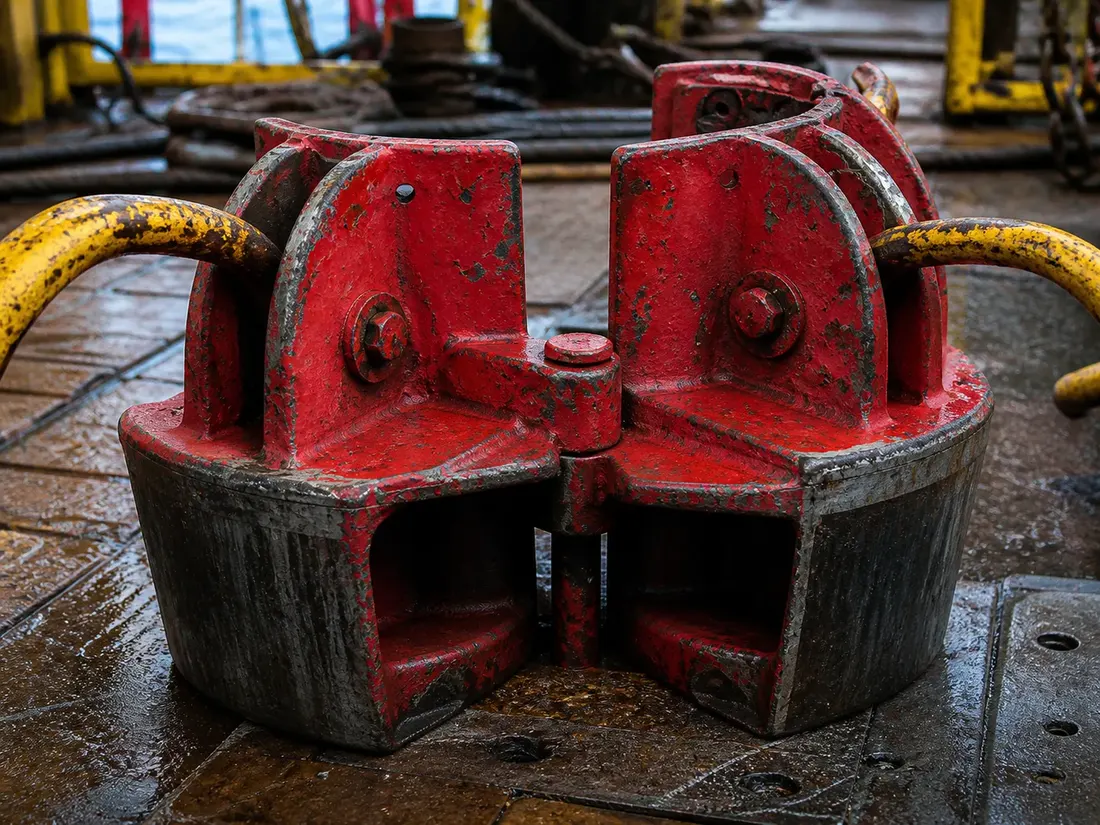
Both titles generally refer to the crew members working the drill floor under the driller: tripping pipe in and out of the hole, making and breaking connections, handling tongs, slips and elevators, operating or working around pipe-handling machinery, and assisting with mud handling and rig-floor housekeeping. Crew configurations vary by rig and contractor, and positions such as lead floorhand, motorman and derrickhand carry duties that differ from one operation to the next. Manual pipe handling and mechanized pipe handling present different hazards, and a description of the actual method matters more than the title on your paperwork.
Drilling-floor work has several features that shape an injury review:
- The work is coordinated. Connections and trips involve the driller at the controls, floorhands on the pipe and a derrickhand above. When timing breaks down, people get hurt. Who was doing what, and who signaled what, is central.
- The equipment is heavy and often automated. Tongs, slips, elevators and pipe-handling machinery all have failure modes and maintenance histories.
- Conditions change quickly. Weather, vessel motion on a floating rig, a hole problem, a rush to make up time or a shift in the plan mid-task can all alter the risk profile.
A floorhand's or roughneck's account should cover the following, without presuming any violation occurred:
- The condition of the equipment you were using or working near, as you observed it, and whether anyone had reported problems.
- How the crew was coordinating, who was giving instructions and whether anything about the sequence was unusual.
- Whether the task changed while it was underway, and who decided that.
- Whether you had been trained on the specific equipment and method in use.
Daily drilling reports, pre-tour meeting notes, training and competency records, and maintenance and inspection records for the equipment involved are the records that frequently matter. Equipment records can be significant when a component failed; training and task-plan records can be significant when the method itself was the problem. Which of these exists and what it shows depends on the rig and operator. Detailed material on suspended-load incidents, falls, crush injuries and the other events that recur on drill floors is on our offshore accident and injury scenarios page.
Driller Injuries: Operational Responsibility Does Not Replace a Factual Coverage Review
A driller's title, control of the drilling equipment or supervision of the floor crew should not be used, by itself, to decide either coverage or fault. Drillers get hurt, and the fact that you were directing others when it happened does not establish that the injury was your responsibility or that you have nothing to pursue.
The driller typically operates the drawworks or drilling controls, monitors well conditions, directs the floor crew and reports to a toolpusher or rig manager. That position puts you closer to the operational decisions than a floorhand, which cuts in more than one direction. Some drillers are hands-on for a good part of the tour; some are almost entirely at the controls. Some have real authority over pace and method; many are working to a plan and pressure set well above them. The review has to establish what your actual duties were, how much of your work was physical, who you reported to and how your assignment fit your overall employment.
Where a driller's hesitation usually comes from is a sense that supervising the operation means owning the outcome. That is not how the analysis works. The questions that matter are:
- Who controlled the operation? The driller runs the floor, but the plan, staffing, equipment, schedule and many go/no-go decisions typically sit with the toolpusher, the company representative and the operator. Control over the operation is a factual question with several layers.
- What instructions or conditions changed? Pressure to make up time, a change in the program, a weather call, equipment that was kept in service after problems were reported.
Two things a driller should not conclude on his own: that a supervisory title takes you outside seaman status, and that directing a crew means comparative fault will swallow the claim. The first is a question about your overall connection to the vessel and your duties, covered on our page on how seaman status is evaluated. The second is a question about the employer's conduct and your own, and about how fault is actually apportioned in these cases, which is addressed on our Jones Act negligence page. Neither should be decided by assumption before anyone has looked at the facts.
Mixed Assignments and Staffing Companies: Reconstruct the Work History Before Drawing Conclusions
When your worksite, supervisor or payroll company changed during your employment, the first job is to build an accurate chronology. Neither the location of the injury nor the company on your paycheck necessarily resolves who your employer was for legal purposes, whether you were connected to a vessel, or who else may bear responsibility. Complex arrangements do not guarantee additional claims. They do guarantee that a careful review is needed before anyone draws conclusions.
Offshore work is full of these arrangements. A hand is hired by a staffing company, dispatched to a drilling contractor, works on a drillship for several hitches, gets moved to a jack-up, spends a hitch on a fixed platform, and is injured on the platform. The operator holds the lease; a different company owns the rig; a third company employs the crane operator. Which of these facts controls?
Courts generally assess seaman status by looking at the worker's overall employment rather than a snapshot of the task at the moment of injury, so status does not flip every time a worker steps from a vessel onto a platform. A genuine, permanent reassignment can change the analysis. Distinguishing a temporary detail from a real change in the essential character of the job is one of the things the chronology is for, and the detailed test is on our page on how seaman status is evaluated.
A useful chronology answers, for each period of your employment, five separate questions:
- Who hired you?
- Who paid you?
- Who supervised and directed your daily work, if different from the company that paid you?
- Who operated the rig, vessel or facility you were assigned to, by name, with dates?
- Who owned it, if you know?
Along with those, record your duties during each assignment in your own words, and how and why assignments changed, including whether the change was presented as temporary or permanent.
Answering these questions is not the same as declaring each company a proper defendant. The law sometimes treats a company other than your payroll employer as your employer for certain purposes, which can affect who owes what and who may be immune from suit, and whether a company is a potentially liable third party depends on the arrangement and on doctrines that have their own pages: contractor and premises negligence and third-party claims alongside the Jones Act or LHWCA. The job description in a company file and the work a person actually performed do not always match, and the way to resolve that is with dates, names, vessel logs and the accounts of the people who worked alongside you.
After an Offshore Injury, Preserve Your Account of the Work and Prioritize Medical Care
Get the medical care you need, report the injury accurately, and hold on to the records you already lawfully have. Do not delay asking for advice because documents are missing or because you have not figured out which law applies. Most of what a lawyer needs at the start is in your head and in your own files.
Medical care and reporting
- Get evaluated and follow the treatment your clinicians recommend. If cost, transportation or scheduling around a hitch makes that hard, say so and ask for help rather than skipping care; a documented reason for a gap in treatment reads very differently from an unexplained one.
- Report the injury to your employer as required, and report it accurately: what you were doing, what happened, what hurts. Do not minimize symptoms because you hope they will pass.
- Keep copies of anything you sign or are given in connection with the injury, including the incident report.
Write down your account while it is fresh
- Your actual duties on this assignment, not the job description.
- Vessel or facility name, your assignment dates and who supervised you.
- The task you were performing, step by step, and what changed.
- The equipment involved and its condition as you observed it.
- Names of everyone who was present or who you told about the injury.
- Where you were treated and when.
- Every document you have already signed since the injury.
Records you may already have
Your own records are the easiest to preserve: pay statements and W-2s or 1099s covering a meaningful period before the injury; hitch schedules, crew-change notices and overtime or premium-pay records showing your rotation and how you actually earned a living; text messages and emails about assignments or the incident; photographs you took lawfully in the ordinary course; training certificates; and written work restrictions, treatment records and any light-duty or return-to-work communications from the company. Keep them where they will not be lost.
Records counsel may need to request
Employer-held records are different: crew assignment and vessel logs, hitch and assignment records, cargo transfer documentation, work orders and permits, job safety analyses and pre-job or pre-tour meeting notes, crane and lift plans, daily drilling reports, handover notes, training and competency records, maintenance and inspection records, camera footage and statements from other crew. Those may need to be requested formally. Do not try to obtain them yourself through unauthorized access to company systems, do not remove documents you are not entitled to, and do not alter or delete anything, including your own messages or social media. Improper collection can damage a good case and may carry consequences of its own.
Statements and releases
- Cooperate with required incident reporting. Nothing here suggests otherwise.
- Before giving a recorded statement to an adjuster, investigator or company lawyer, or before signing any release, settlement or document you do not fully understand, get individualized advice. Some of these documents carry response deadlines or consequences that are not obvious from their face, so ask promptly rather than putting the question off.
Return-to-work pressure
You may be encouraged to come back to the rig or vessel before you are ready, sometimes to light duty that turns into full duty within days. Discuss your actual restrictions with the clinician treating you, get them in writing and follow them. We cannot promise that following restrictions will protect your position, and we will not pretend otherwise. What we can tell you is that returning too early and getting hurt again helps no one, and that documented restrictions are meaningful evidence of what the injury has done.
Time limits
Notice and filing requirements differ depending on which framework applies, and some are short. Compensation frameworks like the LHWCA have their own notice and claim deadlines, addressed on our LHWCA filing deadlines page. There is no single universal deadline to state here. The right course is to have your facts reviewed promptly so the applicable limits can be identified. Broader information on what an offshore injury may entitle you to is on our offshore injury rights and compensation page.
Medical Bills and Missed Hitches Require a Coverage-Specific Review
Who may be responsible for your treatment costs and your lost income depends on which legal framework applies to you. Maintenance and cure, the obligation many offshore workers have heard about, is owed to seamen injured in the service of a vessel. It is not available to every offshore worker simply because the injury happened offshore. Workers outside seaman status may have compensation benefits under the LHWCA, directly or through OCSLA, which operate on different terms.
Because the routes differ, the detail is on their own pages:
- Maintenance and cure for qualifying seamen: the no-fault obligation to provide a daily living allowance and medical care to an injured seaman, and what to do when it is denied, delayed or cut off.
- LHWCA benefits and compensation: how wage-loss and medical benefits work under the compensation framework for non-seamen.
- Offshore injury rights and compensation: the wider picture of what may be recoverable and from whom.
Your role and your work pattern inform every one of those analyses. Offshore compensation is not a single salary figure. It is day rates, hitch schedules, overtime, per diems and sometimes bonuses, and whether you can return to a job that requires you to pull slips or rig cargo baskets in rough seas is a question about your body and your specific work, not about work in general. The pay, rotation and restriction records listed in the checklist above are what show how you actually earned a living and what you can and cannot do now.
No one can responsibly offer a benefit calculation, settlement range or guarantee of payment without understanding your work history and medical picture. Anyone who does so before then is guessing.
Sources and Scope of This Page
This page is general information about how the injury rights of offshore deckhands, roustabouts, roughnecks, floorhands and drillers are evaluated. It is not legal advice about your situation, and reading it does not create an attorney-client relationship. The legal principles described here are drawn from the following authorities:
- 46 U.S.C. § 30104 — the Jones Act provision allowing a seaman injured in the course of employment to bring a negligence action against the employer. This supports the statement that the Jones Act is an employer-negligence remedy for qualifying seamen, not general offshore coverage.
- ***Chandris, Inc. v. Latsis*, 515 U.S. 347 (1995)** — the Supreme Court's framework for seaman status: duties that contribute to the vessel's function or mission, and a connection to a vessel in navigation substantial in duration and nature, assessed over the worker's overall employment rather than the moment of injury. This supports the statements that job title alone does not decide status and that mixed assignments require a fact-specific analysis.
- ***Sanchez v. Smart Fabricators of Texas, L.L.C.*, 997 F.3d 564 (5th Cir. 2021) (en banc)** — the Fifth Circuit's en banc decision addressing the "nature" element of vessel connection. How it applies to a particular work history, and its subsequent treatment, should be reviewed with counsel before it is relied on in any case.
- 43 U.S.C. § 1333(b) — the OCSLA provision extending LHWCA-type compensation to injuries arising from natural-resource operations on the Outer Continental Shelf, and excluding masters and members of a vessel's crew. This supports the statement that some non-seaman offshore workers may have a compensation route and that seaman status and OCSLA coverage are generally alternatives.
- ***Pacific Operators Offshore, LLP v. Valladolid*, 565 U.S. 207 (2012)** — the Supreme Court's substantial-nexus test for OCSLA compensation coverage, which supports the statement that injury location alone does not decide OCSLA coverage.
- 33 U.S.C. §§ 902, 905 and 933 — LHWCA definitions, the limits on employer liability, the vessel-negligence provision and the preservation of third-party claims. These support the qualified routing statements about non-seaman coverage and claims against parties other than the employer.
The occupational descriptions on this page are offered as prompts to help a worker describe his own duties. Job content, crew configurations and titles vary by employer, rig and assignment, and the descriptions here are not a statement of how any particular operation was staffed or run. Nothing on this page reports a case result, compares this firm to any other, or describes a specific client.
Statutes and case law are applied to facts, and the facts of offshore employment are rarely simple. Detailed treatment of the seaman-status analysis is on our page on how seaman status is evaluated, and the compensation framework for non-seamen is on our Longshore and Harbor Worker claims page.
Tell The Young Firm What You Did Offshore and How You Were Hurt
You can start a review with information you already have. You do not need complete records, and you do not need to have decided whether you are a seaman, a longshore worker or something else. Sorting that out is the reason to contact a maritime injury lawyer before you have the answer rather than after.
The account described earlier on this page is enough to begin: your job title and what the work actually involved; the company that paid you and the company that directed your work, if they were different; the vessel, rig or platform where you were injured, by name if you know it, and any other places you were assigned during this employment; the date of the injury and a short description of what you were doing when it happened; where you have been treated and what you have been told; anything you have already signed or any statement you have already given; and what is worrying you most right now, whether that is treatment, income, pressure to return or something else.
A review of that information can address the legal routes that may be open to you based on your duties and assignments, the records that should be preserved or requested, and any time-sensitive issues that need attention. It cannot promise a particular outcome or that the firm will take a given case, and we will not suggest otherwise. Contacting the firm or providing information about your injury does not by itself create an attorney-client relationship.
If your injury involves a different kind of offshore work or you want a broader view of how these cases are handled, our main page on offshore injury claims is the place to look, and more about The Young Firm is on our homepage. If your job was one of the five on this page, contact The Young Firm, tell us what you did and how you were hurt, and start there.