
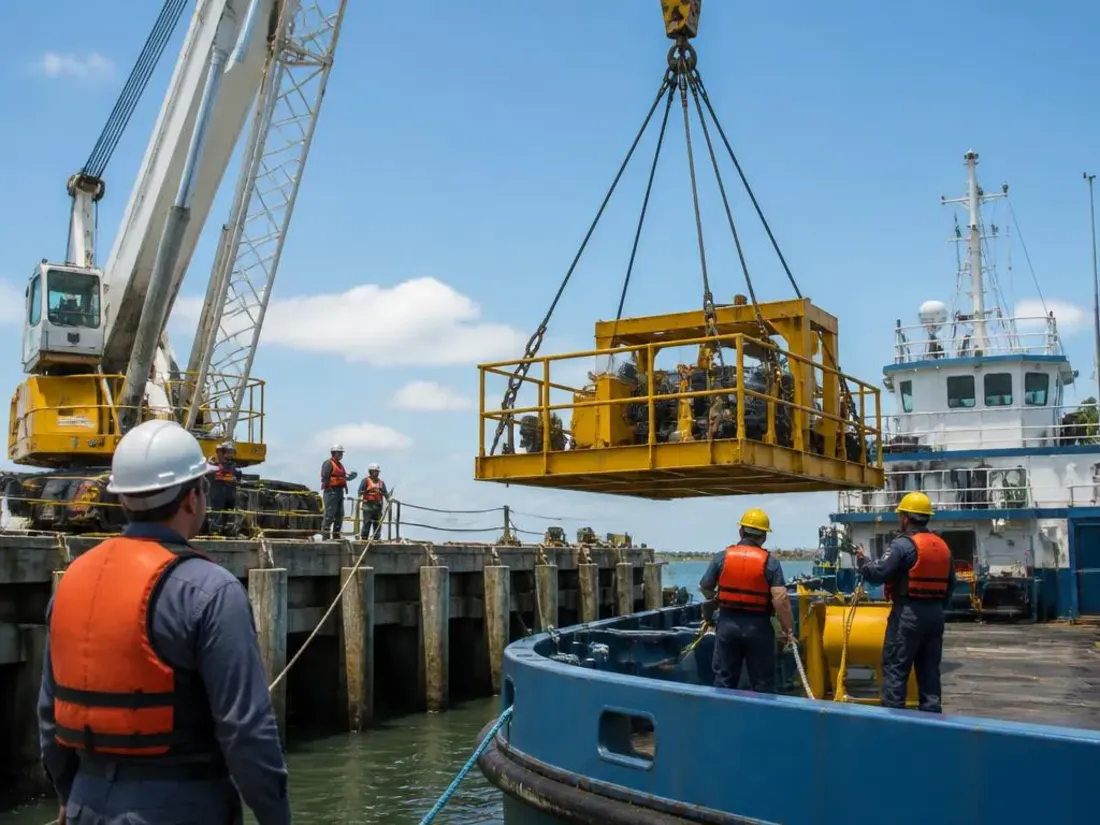
It may not. Under federal maritime law, a vessel owner, operator, or other legally responsible vessel interest can face a negligence claim when its breach of a duty it actually owed caused your injury. That sentence carries two important qualifications. First, being injured aboard a vessel does not by itself make the vessel liable; the law asks what the vessel's people did, controlled, or knew. Second, the company whose name is painted on the hull is not always the company that bears legal responsibility.
The Young Firm represents injured maritime workers from New Orleans, across Louisiana, and along the Gulf Coast. The job of a vessel owner negligence lawyer is to work backward from the facts you already have—what your job was, which vessel you were on, who employed you, what happened, and what the vessel's crew or management was doing at the time—to the vessel interests that may bear responsibility and the evidence that connects them to your injury. You do not need to know the correct defendant, the right statute, or your legal classification before asking for that review. To request one, contact The Young Firm and describe what happened.
This page explains how the analysis works so you can decide whether your situation is worth investigating. It sits within the firm's broader coverage of other third-party maritime injury claims.
Can I Sue the Vessel Owner After a Maritime Injury?
Possibly. The honest answer depends on four things: your worker status, the vessel's status, the employment and contractual relationships involved, and what actually caused the injury. No one of those alone settles the question.
The most common source of confusion is the assumption that "vessel owner negligence" is one uniform claim. It is not. Workers covered by the Longshore and Harbor Workers' Compensation Act receive compensation benefits from their employer without proving fault, and 33 U.S.C. § 905(b) separately allows a covered worker injured by the negligence of a vessel to bring a negligence action against that vessel. A member of a vessel's crew is excluded from LHWCA coverage; a seaman's remedies run through the Jones Act and unseaworthiness, and Section 905(b) is not a seaman's remedy. The table below routes each situation to the framework that governs it.
| Your situation | Likely claim framework against a separate vessel interest | Qualification |
|---|---|---|
| Covered LHWCA worker injured by vessel conduct | Negligence action under 33 U.S.C. § 905(b) | Requires coverage, vessel status, and proof of negligence; unseaworthiness cannot be the basis. Detailed eligibility and duty analysis: Section 905(b) claims for covered maritime workers. Benefits side: Longshore Act benefits and coverage |
| Jones Act seaman injured aboard a non-employer's vessel | General maritime negligence against the vessel interest; Jones Act against the employer | Status must be established; remedies are not interchangeable. See Jones Act claims against an employer and how unseaworthiness claims differ |
| Vessel owner is also your employer | Special statutory review | Section 905(b) draws two different lines. A worker employed by the vessel to provide stevedoring services cannot sue the vessel for an injury caused by the negligence of those providing stevedoring services to it. A worker employed to provide shipbuilding, repairing, or breaking services whose employer is the vessel's owner, operator, or charterer cannot bring the vessel action against that employer at all. The dual-capacity analysis is covered under Section 905(b) claims for covered maritime workers |
| Status unknown | Fact-based review of duties, vessel connection, and work site | No classification is required to request a review |
Many workers do not know their status. A job title, a payroll label, a 1099 rather than a W-2, or the fact that you spent the day aboard a vessel does not resolve classification. Status turns on the nature and duration of your connection to a vessel or fleet and on where and how you were working. A worker can be misclassified by an employer, and an initial benefits payment does not lock in a legal conclusion.
One point deserves emphasis. A claim against your employer and a claim against a separate vessel interest are distinct. They involve different defendants, different duties, and in some cases different courts and deadlines. Success on one does not establish the other.
The Registered Owner, Operator, and Employer May Be Different Companies
If all you know is the vessel's name, that is a genuine starting point. It is not the finish line. Commercial vessels working the Mississippi River, the Port of New Orleans, and the offshore Gulf are frequently owned by one company, operated or managed by another, chartered to a third, and crewed by employees of a fourth. Each arrangement changes who controlled what.
The LHWCA recognizes this. Under 33 U.S.C. § 902(21), the statutory term "vessel" includes not only the physical vessel but its owner, owner pro hac vice, agent, operator, charterer or bareboat charterer, master, officer, and crew member. That definition is why a Section 905(b) claim may reach a party other than the registered owner. It does not mean every person on that list is liable in a given case. Liability still requires showing that the particular interest owed a duty, breached it, and caused the injury.
| Vessel interest | Conduct or control to investigate | Records that help | Limit of the label |
|---|---|---|---|
| Registered owner | Vessel condition, maintenance decisions, equipment supplied, hazards known before turnover | Ownership and documentation records, maintenance and inspection files, prior incident reports | Ownership alone does not prove control of the operation or knowledge of the hazard |
| Operator or manager | Day-to-day crew direction, navigation, cargo and deck operations, safety practices | Operating agreements, management contracts, standing orders, safety manuals, logs | A management contract may allocate duties differently from the title suggests |
| Bareboat or time charterer | Whether the charterer took over crewing and operational control (bareboat) or only commercial direction (time charter) | Charter party, crew employment records, voyage instructions | Contract type strongly affects responsibility; the word "charterer" alone tells you little |
| Employer | Your assignment, training, supervision, equipment, and whether it also acts as the vessel | Employment records, work orders, job safety analyses | The employer's role as employer is governed by compensation law or the Jones Act; its role as vessel, if any, is analyzed separately |
Investigation typically draws on ownership and documentation records, charter agreements, crew employment records, work orders, operating instructions, and the practical question of who was giving directions on deck. A corporate name that resembles your employer's, or a contract that assigns a task to one entity, is a lead rather than a conclusion. Responsibility for the general negligence of charterers, contractors, and site owners beyond the vessel itself is addressed under contractor and premises responsibility.
Who Controlled the Work, and When Did the Vessel Crew Know About the Danger?
Here is the distinction that separates a vessel-negligence claim from an accident that simply happened aboard a vessel: the evidence must connect the responsible vessel interest's conduct or omission to your injury, and the duty that interest owed depends on control, timing, and knowledge.
For covered workers in stevedoring operations, the U.S. Supreme Court set out the framework in Scindia Steam Navigation Co. v. De Los Santos, 451 U.S. 156 (1981), and refined it in Howlett v. Birkdale Shipping Co., 512 U.S. 92 (1994). The full doctrinal treatment belongs to the firm's page on Section 905(b) claims for covered maritime workers. For deciding whether your facts are worth investigating, the framework reduces to three time windows and a control-and-notice question in each:
- Before your work began. The vessel owes two related turnover duties. It must turn over the ship and its equipment in a condition that allows an expert and experienced stevedore to work with reasonable safety, and it must warn of latent hazards it knows or should know about that the stevedore could not be expected to discover. The warning duty generally does not extend to hazards that are open and obvious or that a competent stevedore should anticipate, and Howlett made clear that this limited warning duty does not generally require the vessel to supervise the stevedore's loading or to inspect completed cargo stowage for hazards. Whether a particular hazard falls within the safe-condition duty, the warning duty, or an exception to either is a separate analysis addressed on the Section 905(b) page linked above.
- During the operation. Where the vessel keeps active control of an area or piece of equipment, it may be responsible for hazards there. Where the operation is turned over to the stevedore, the vessel generally is not required to supervise the stevedore's methods or discover dangers the stevedore creates.
- After a danger developed. A duty to intervene arises only when the vessel has actual knowledge of a dangerous condition and actual knowledge that the stevedore, exercising obviously improvident judgment, intends to keep working despite it and cannot be relied on to fix it. A voiced concern alone does not trigger this duty, and it does not make the vessel the guarantor of the stevedore's judgment.
These stevedoring formulations do not apply word-for-word to every maritime worker or every operation. A seaman's negligence claim against a non-employer vessel interest is analyzed under general maritime negligence principles, and the Fifth Circuit has its own body of decisions on notice, retained control, and non-stevedoring settings. The common thread across all of them is factual: what did the vessel's people control, what did they know, and when?
Two related issues come up in nearly every review. First, obviousness. If a hazard was open and obvious, that can affect whether the vessel owed a duty to warn about it, but it does not resolve questions about active control or intervention. Second, your own fault. Maritime law applies comparative fault, meaning a worker's share of responsibility can reduce a recovery rather than automatically defeat it. Neither issue should be assumed to end a claim, and neither should be assumed to be irrelevant.
The Same Equipment Hazard Can Raise Different Liability Questions
Two workers can suffer the same injury from the same type of equipment on the same kind of vessel and have entirely different cases. The variables are vessel participation, control, and notice. The following are hypotheticals constructed to illustrate the analysis. They are not descriptions of any client matter or firm result.
Hypothetical A. A covered dock worker is injured when a vessel's cargo winch slips under load during a discharge operation at a Mississippi River terminal. The winch is the vessel's equipment, operated by a vessel crew member at the vessel's direction. The contractor's crew had no role in operating or maintaining it.
Known facts: vessel-owned equipment, vessel operator at the controls, injury during an operation the vessel was actively running. Missing evidence: the winch's maintenance and inspection history, prior malfunction reports, who directed the lift, and whether the load exceeded rated capacity. Vessel-side question: did the vessel breach its duty in operating or maintaining equipment under its active control? Why no outcome can be promised: the records may show a well-maintained winch that failed without warning, a load the contractor rigged improperly, or a component defect traceable to a manufacturer. Each points toward a different party.
Hypothetical B. A covered dock worker on a different vessel suffers the same injury from the same type of winch. This time the contractor's own personnel operated the winch after the vessel turned the deck over for the discharge. Two days earlier, a vessel crew member noted in the deck log that the winch brake was "sticking" and needed service. No one told the contractor.
Known facts: contractor operating the equipment, vessel not in active control of the operation, a documented pre-existing problem known to the vessel. Missing evidence: whether the brake condition was communicated to anyone, whether the contractor's crew could reasonably have detected it, and whether the log entry describes the failure that actually occurred. Vessel-side question: did the vessel fail its turnover duty to warn of a latent hazard it knew about? Why no outcome can be promised: if the defect was apparent on a reasonable pre-use check, the turnover analysis changes; if the log entry concerned a different component, causation is in dispute.
The lesson is not that one hypothetical is a winner and the other a loser. It is that the same broken winch can implicate the vessel's operation, the vessel's knowledge, the contractor's methods, or a defective product, and only evidence tells you which. Where the equipment failed because of a design or manufacturing defect, the analysis shifts toward claims involving defective maritime equipment. Where a contractor's own practices caused the harm, it shifts toward contractor and premises responsibility. Where the injured worker is a seaman and the complaint is that the vessel itself was unfit, the question is one of unseaworthiness, which is a different claim with different standards.
Preserve the Facts That Show Vessel Control, Notice, and Injury
Your health and safety come first. Get medical care and follow it. Then, to the extent you lawfully can, preserve what you have. Vessels keep moving, crews rotate, and the deck where you were hurt may be cleaned, repaired, or in another port within days.
What you may already hold
- Vessel identification: the vessel's name, any number visible on the hull or documents, the company name on the vessel or your assignment paperwork. This is the starting point for identifying every vessel interest.
- Date, time, and location: the terminal, dock, fleeting area, platform, or offshore coordinates. Location bears on jurisdiction and on which law governs.
- Employer details: your employer's name, your supervisor, who assigned the work, and any staffing or contracting company involved. This bears on your status and on whether the employer is also a vessel interest.
- Photographs and video you lawfully possess: images of the equipment, deck, lighting, and surroundings you took or were given. These bear on condition and obviousness.
- Reports and messages: incident reports you signed or received, texts or emails about the job, safety meeting notes, and any communication mentioning the hazard before or after the accident. These bear on notice and control.
- Witness information: names, employers, and contact details of coworkers, vessel crew, and anyone else present. Witnesses bear on who was directing the work and what was said.
- Medical records: every provider visit, diagnosis, and restriction. These establish causation and the extent of harm.
- Wage records: pay stubs and tax records. These support lost-earnings claims.
What counsel may seek
- Ownership, documentation, and charter records that identify the responsible vessel interests
- Deck, engine, and bridge logs covering the days before and after the incident
- Maintenance, inspection, and repair records for the equipment or area involved
- Work orders, job safety analyses, and turnover or pre-operation communications
- Crew communications, standing orders, and safety management documents
- Vessel or terminal video, which may be overwritten on a short cycle
Each category maps to an element of the claim: identity of the defendant, control, knowledge, causation, or losses. You do not need to gather the second list yourself, and you should not try. Do not board a vessel without permission, remove or alter equipment, edit original photographs or documents, or attempt to obtain material you are not authorized to have. Counsel can request preservation of records you cannot reach. How long any particular record survives depends on the company and the system; there is no universal retention period to rely on, which is exactly why early review matters.
A Vessel Claim May Address Additional Losses, but Benefits and Settlements Need Coordination
Compensation benefits under the LHWCA pay medical care and a portion of lost wages without regard to fault. They do not pay for pain, suffering, or the full measure of lost earning capacity. A viable negligence claim against a separate vessel interest may seek those additional, legally recoverable losses: medical expenses, past and future lost earnings or earning capacity, and pain and suffering, all subject to the governing law and the proof in your case.
Several things affect what a claim is actually worth: whether liability can be proven, whether medical evidence ties the injury to the incident, how thoroughly losses are documented, and how any comparative fault is allocated. No responsible lawyer can assign a value to a case from a page description, and this page will not.
Pursuing a vessel claim while receiving benefits does not mean recovering twice for the same loss. Under 33 U.S.C. § 933, third-party recoveries and compensation benefits are coordinated. What matters for a worker who has been handed a release is this: a recovery from or settlement with a vessel interest can affect your compensation benefits, and it may trigger approval or notice requirements whose neglect carries real consequences. Do not sign a release or settlement document from a vessel interest, its insurer, or anyone else without having it reviewed first. The mechanics of assignment, credits, reimbursement, and settlement approval are covered under pursuing a third-party claim alongside maritime benefits, and the benefits framework under Longshore Act benefits and coverage.
Review Deadlines Before Waiting for Treatment or Benefits to Finish
Workers often wait to explore a vessel claim until treatment ends or benefits stop. That is understandable and can be a mistake. Reporting an injury to your employer, filing a compensation claim, and receiving benefits do not preserve a separate lawsuit against a vessel interest. That lawsuit has its own clock.
For personal injury actions arising from a maritime tort, 46 U.S.C. § 30106 generally sets a three-year period from the date the cause of action arose. That is a general rule, not a promise. Exceptions and complications include:
- Government vessels. Claims involving vessels owned or operated by the United States proceed under different statutes with their own procedures and shorter time limits.
- Limitation-of-liability proceedings. A vessel owner can file a federal proceeding seeking to limit its liability to the value of the vessel. The court sets a deadline by which every claimant must file, and that deadline can be far shorter than three years. A notice of such a proceeding requires immediate attention.
- Contract and forum provisions. Some arrangements attempt to shorten periods or direct claims to particular courts. Their enforceability varies.
- Disputed accrual dates. When an injury or its cause was not immediately apparent, the starting point can be contested.
Lawsuit deadlines are separate from the LHWCA notice and filing deadlines attached to compensation benefits. Do not assume that tolling applies to your situation, and do not assume that contacting a law firm files anything. Keep every envelope, notice, proposed release, and court paper you receive, and be prepared to give the incident date and location. A review can then determine which deadlines apply to which potential defendants.
Legal Authorities Behind the Vessel-Responsibility Review
The explanations on this page draw on the following federal statutes and court decisions. General information cannot establish whether a particular defendant is liable in a particular case; that requires applying current controlling law, including Fifth Circuit authority, to your specific facts.
- 33 U.S.C. § 902(21) — statutory definition of "vessel," extending to the owner, owner pro hac vice, agent, operator, charterer or bareboat charterer, master, officer, and crew member.
- 33 U.S.C. § 905(b) — the covered worker's negligence action against the vessel; excludes unseaworthiness as a basis; bars the same-vessel stevedoring-negligence claim and the shipbuilding, repairing, and breaking employee's action against an employer that is also the vessel.
- 33 U.S.C. § 933 — coordination of compensation benefits with third-party recoveries, including assignment, credit, written approval of certain settlements, and notification.
- ***Scindia Steam Navigation Co. v. De Los Santos*, 451 U.S. 156 (1981)** — the turnover, active-control, and intervention duties a vessel owes in stevedoring operations.
- ***Howlett v. Birkdale Shipping Co.*, 512 U.S. 92 (1994)** — scope of the turnover duty to warn of latent hazards.
- 46 U.S.C. § 30106 — the general three-year limitations period for maritime personal injury actions.
The hypotheticals on this page are expressly labeled and are not case results. Nothing here substitutes for a review of your own facts.
Tell The Young Firm What Happened—Even If You Do Not Know Who Owns the Vessel
A vessel-owner negligence review looks at five things: your likely worker status, the vessel interests that may bear responsibility, the evidence of control and notice, the deadlines that apply to each potential defendant, and any benefit-related risk in a release or settlement you have been offered.
To begin, you do not need to identify the statute, prove negligence, or produce charter documents. You need to describe what you know:
- the vessel's name or any identifier you have
- your employer and the company or companies you understood to be running the operation
- the date and location of the incident
- the task you were performing and how the injury happened
- your injuries and treatment so far
- any incident reports, notices, court papers, or proposed releases you have received
Unknown ownership and incomplete records are common at this stage and are not reasons to hold back. Identifying who actually controlled the vessel and what its crew knew is the work the review is meant to do.
An inquiry to The Young Firm is not, by itself, an attorney-client relationship, and it does not file a claim or stop any deadline from running. Representation begins only when the firm agrees to take on your matter. To request a review of a possible vessel-owner negligence claim, contact The Young Firm.